

Sustainable Waste Management Solutions for Corporates in India
Target Keyword: Corporate Waste Management Solutions Secondary Keywords: sustainable waste management for businesses, corporate waste recycling
Introduction
Waste generation has become one of the most pressing sustainability challenges for businesses in India. Offices, corporate campuses, hotels, and manufacturing facilities produce significant amounts of waste every day from food waste and packaging materials to paper and electronic waste.
Without an efficient waste management system, much of this waste ends up in landfills, contributing to environmental pollution and increasing disposal costs for organizations.
Adopting corporate waste management solutions allows businesses to reduce their environmental footprint while improving operational efficiency. Sustainable waste practices also support circular economy principles by ensuring that valuable materials are reused or recycled rather than discarded.
This article explores the types of waste commonly generated by businesses and the most effective waste management solutions companies can implement.
Types of Corporate Waste
Organizations generate different types of waste depending on the nature of their operations. Understanding these waste streams is the first step toward building an effective waste management strategy.
Organic Waste
Organic waste includes biodegradable materials such as food scraps, garden waste, and biodegradable cafeteria waste. Corporate offices, hotels, and institutional kitchens are major sources of organic waste.
Plastic Waste
Plastic packaging materials, bottles, containers, and disposable items are commonly produced in offices and commercial spaces. Without proper recycling systems, plastic waste often ends up in landfills or pollutes natural ecosystems.
Paper Waste
Offices generate large amounts of paper waste from printing, packaging, and administrative documentation. Although many businesses are moving toward digital workflows, paper still remains a significant waste category.
Food Waste
Corporate cafeterias, restaurants, and hospitality businesses produce substantial quantities of food waste. Managing this waste responsibly is an important part of sustainable business operations.
Electronic Waste
Electronic waste includes discarded devices such as computers, printers, batteries, and other electronic equipment. E-waste contains hazardous materials and requires specialized recycling processes.
Key Waste Management Solutions for Businesses
Companies can significantly reduce their environmental impact by adopting structured waste management practices.
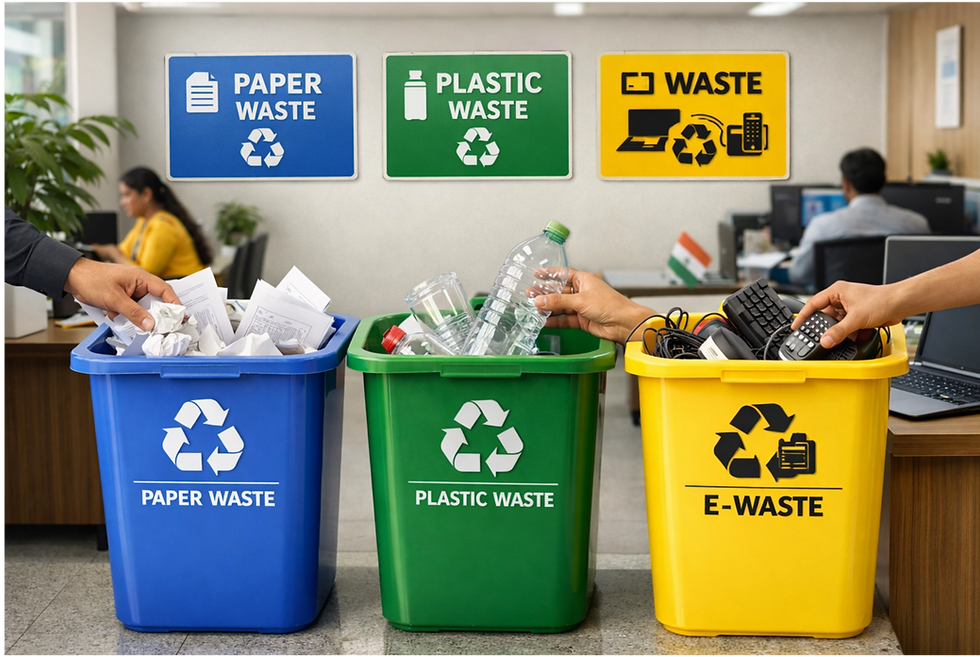
Waste Segregation
Proper waste segregation is the foundation of any effective waste management program.
Businesses should categorize waste into clearly defined streams such as:
biodegradable waste
recyclable materials
non-recyclable waste
Implementing labeled bins and educating employees about waste segregation helps ensure that recyclable materials are properly processed instead of being mixed with general waste.
Composting Organic Waste
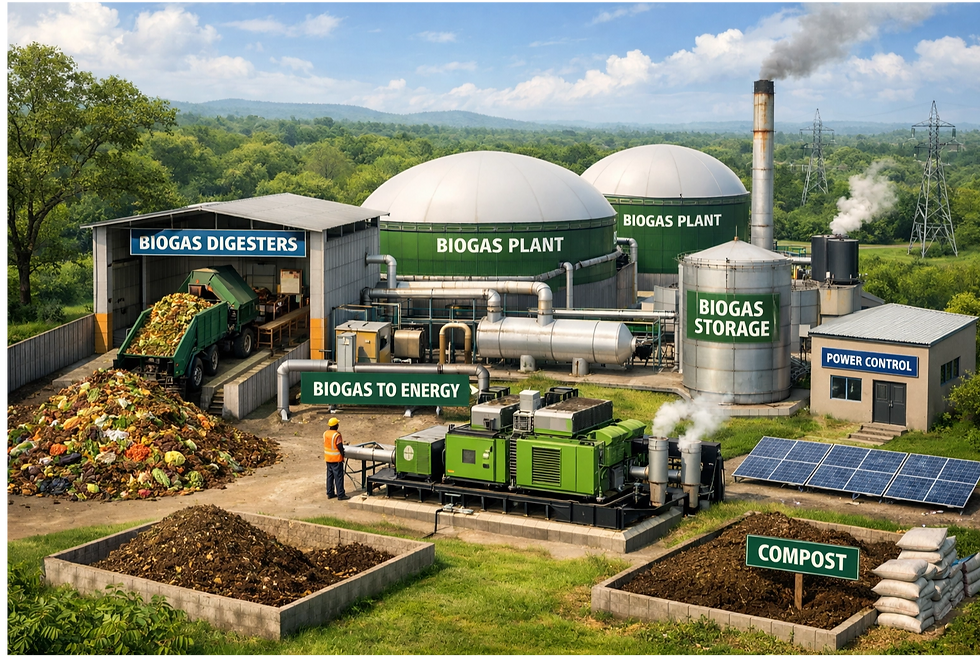
Corporate cafeterias and hospitality businesses often generate large quantities of food waste. Composting is an effective way to convert this organic waste into nutrient-rich compost.
The compost produced can be used for landscaping, gardening, or agricultural purposes, reducing the amount of waste sent to landfills while creating a valuable resource.
Many organizations are now installing on-site composting systems to manage organic waste more efficiently.
Recycling Programs
Recycling plays a key role in reducing the environmental impact of corporate waste.
Businesses can establish partnerships with recycling vendors to process materials such as:
paper and cardboard
plastic packaging
metal containers
glass materials
By diverting recyclable materials from landfills, companies contribute to resource conservation and reduce waste disposal costs.
Waste-to-Resource Solutions
Some companies are adopting innovative approaches that transform waste into useful resources.
Examples include:
converting organic waste into compost or biofertilizer
producing recycled packaging materials from plastic waste
generating renewable energy from waste through bio-energy systems
These waste-to-resource solutions support circular economy models by keeping materials in productive use for longer periods.
Benefits of Corporate Waste Management
Implementing sustainable waste management systems offers several benefits for businesses.
Lower Waste Disposal Costs
Reducing waste sent to landfills helps companies decrease transportation and disposal expenses.
Improved Sustainability Performance
Companies that actively manage waste demonstrate stronger environmental responsibility, which supports broader sustainability goals.
Regulatory Compliance
Proper waste management helps businesses comply with environmental regulations and waste disposal guidelines.
Stronger ESG Reporting
Waste reduction and recycling initiatives contribute directly to environmental performance indicators used in ESG reporting.
Conclusion
Effective waste management is a critical component of corporate sustainability. Businesses that implement structured waste management systems can significantly reduce landfill waste while improving operational efficiency.
By adopting practices such as waste segregation, composting, recycling, and waste-to-resource initiatives, organizations can move closer to a circular economy model and strengthen their sustainability performance.
As environmental regulations and stakeholder expectations continue to evolve in India, companies that invest in sustainable waste management solutions today will be better positioned for long-term success.


Comments