

World Habitat Day 2026: What Does a Healthy Building Actually Mean for the People Inside It?
A building can look green on paper and still feel unhealthy to the people who use it every day. The certification may be on the wall. The landscaping may look impressive. The energy dashboard may show lower consumption. The building may have efficient lighting, water-saving fixtures and sustainable materials. But walk into the restroom and smell ammonia. Step into a freshly cleaned corridor and breathe in a strong chemical fragrance. See water running unnecessarily every time a urinal is flushed. That is where the conversation around a healthy building becomes much more real.
A healthy building is not only about how efficiently it operates. It is also about what people experience inside it every day. World Habitat Day, observed on the first Monday of October, focuses on the importance of adequate housing and the quality of the places where people live. On 5 October 2026, the global observance will focus on “Adequate Housing for All.” For India’s rapidly growing cities, the idea of habitat has to extend beyond the four walls of a home. Offices, hospitals, malls, schools, airports, factories and public buildings have become part of everyday urban life. That makes the health of these buildings worth looking at more closely.

A green building should also feel healthy
The Indian Green Building Council already recognises that sustainability and occupant well-being are connected. Its Green New Buildings rating system includes Indoor Environmental Quality, while its Green Existing Buildings O&M system includes Health & Comfort alongside water and energy efficiency. That is an important direction for the built environment. A building's environmental performance cannot be separated completely from the experience of the people occupying it. Water efficiency matters because water is a resource. Energy efficiency matters because energy use has environmental and operational consequences. Indoor air quality matters because people spend hours inside these buildings. Cleaning practices matter because the products used every day become part of the indoor environment. Restroom design matters because sanitation is one of the most basic parts of a healthy building.
The restroom is part of the building's health story
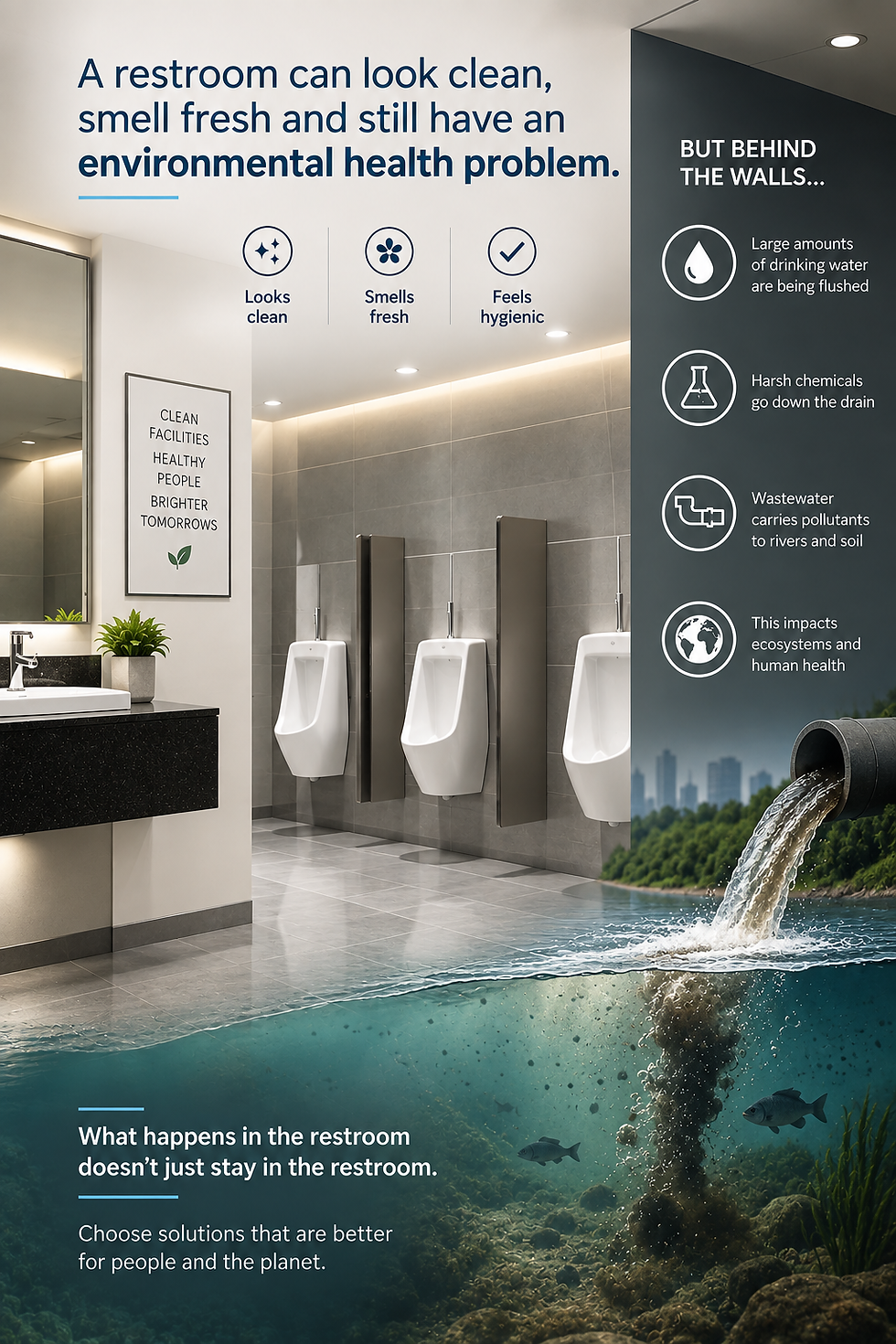
Restrooms are often treated as a maintenance issue rather than a sustainability or health issue. That needs to change. A restroom consumes water, uses cleaning chemicals, generates wastewater and directly affects the experience of employees, visitors, patients, students and customers. Consider a conventional urinal. Every flush sends potable water into the drainage system. Across a busy building, those flushes happen hundreds or thousands of times. At the same time, urine decomposition can contribute to ammonia-related odour when sanitation and drainage systems are not managed properly. The solution should not simply be to add stronger fragrance. Masking an odour is not the same as solving its source. This is where waterless sanitation can become part of a broader healthy-building strategy.

Zerodor: less flushing, less water dependence
Ekam Eco Solutions' Zerodor waterless urinal approaches the problem differently. Instead of using repeated flushing to move urine through the system, Zerodor uses a mechanical sealing valve. Urine passes through the valve into the drainage line, while the valve closes to help prevent gas backflow. That means the urinal does not need a continuous flushing cycle to operate. For a building, the benefit is not limited to saving water. It can also mean less dependence on flushing infrastructure and a different approach to restroom odour management. The important point is that water conservation and sanitation do not have to be treated as separate conversations. A restroom can be designed to use less water without compromising the basic objective of keeping the space hygienic and comfortable.

“Fresh” air should not simply mean strong fragrance
There is another part of building health that often gets overlooked: the chemicals used to create the feeling of cleanliness. Walk into many commercial restrooms and the first thing you notice may be a strong fragrance. It can smell “fresh”. But fragrance and clean air are not the same thing. The World Health Organization notes that VOCs can come from indoor building materials, furniture, paints, carpets and products including detergents. WHO also identifies cleaning products and deodorizers among potential contributors to indoor air pollution. This does not mean every cleaning product creates a dangerous indoor environment. It means building operators need to think about what chemicals they are introducing into spaces where people spend significant amounts of time. The objective should be straightforward:Clean the surface without unnecessarily loading the indoor environment with chemicals. That is particularly relevant for offices, hospitals, schools and other buildings where cleaning happens continuously.
Cleaning is necessary. The chemistry matters too.
A healthy building is not a building that avoids cleaning chemicals altogether. Cleaning is essential for hygiene. The smarter question is what products are being used, how much is being used,where they are being used and whether safer alternatives can deliver the required cleaning performance. WHO recommends eliminating unnecessary chemical exposure or substituting equally effective, less-toxic chemicals where possible, alongside adequate ventilation and appropriate training for workers handling cleaning products. This is where Zerodor Care fits into the larger building-health conversation. Its range of plant-based and bio-enzyme cleaning products is designed around everyday cleaning needs while avoiding ingredients such as chlorine bleach, phosphates, parabens and petroleum solvents in its formulations. The goal is not to make cleaning optional. It is to make the cleaning process more thoughtful.

Water efficiency is also a health decision
Water conservation is often discussed through numbers: litres saved, percentage reduction and annual consumption. Those numbers matter. But there is a human side to water efficiency too. Buildings depend on reliable water supplies for drinking, sanitation, cleaning and daily operations. Reducing unnecessary demand can help buildings become more resilient, particularly as cities deal with increasing pressure on water resources. IGBC's Green New Buildings framework, for example, identifies water conservation as one of its core areas and notes water-saving benefits alongside improved air quality and occupant health and well-being. A building that saves water through efficient sanitation is not merely reducing a utility bill. It is reducing the amount of treated water being used for a task that may not require it.
The healthy-building conversation should continue after certification
Certification can help create a framework. But the real test begins when people enter the building.A facility manager sees the overflowing bin. The housekeeping team deals with the restroom every morning. Employees notice the chemical smell. Visitors notice the restroom odour. The maintenance team deals with repeated plumbing complaints. These everyday experiences determine how a building actually performs. This is why healthy-building thinking needs to move from the design stage to daily operations. Architects can design for water efficiency. Builders can specify healthier materials. ESG teams can establish sustainability targets. Facility managers can monitor performance. Housekeeping teams can implement better cleaning practices. And occupants can be given systems that make sustainable behaviour easier. Everyone has a role.
A healthier building can start with very ordinary decisions
Not every improvement requires a massive retrofit. Sometimes it starts with a restroom. Replace unnecessary flushing with waterless sanitation. Review the chemicals used by housekeeping. Reduce unnecessary fragrance-based odour masking. Improve ventilation where required. Train cleaning teams properly. Monitor water consumption. Track recurring odour and maintenance complaints. Choose products based not only on price, but also on what they introduce into the building. These decisions may not make the most dramatic photographs for a sustainability report. But they are the decisions people experience every day.
Habitat is more than shelter
The idea of habitat has expanded with our cities. People spend their days moving between homes, offices, schools, hospitals, transport hubs, retail spaces and public infrastructure. Every one of these places contributes to the environment people experience. That means the future of green buildings cannot stop at energy efficiency, certification plaques or beautiful landscapes. It needs to include the air people breathe, the water they use, the sanitation they depend on and the chemicals used to maintain their surroundings. At Ekam Eco Solutions, our approach is to make these everyday systems more sustainable through practical solutions from Zerodor waterless sanitation to wastewater treatment and Zerodor Care's eco-conscious cleaning solutions. Because a building should not only be sustainable from the outside. It should be healthier to experience from the inside. Build green. Operate responsibly. Create healthier habitats. On World Habitat Day 2026, that is a useful standard to keep in mind. A healthy building is ultimately one that takes care of the people who spend their lives inside it.
Book a Washroom Health Assessment
If you're a builder, architect, facility manager or ESG team looking to evaluate restroom water use, odour management, cleaning practices and opportunities for healthier operations, a washroom health assessment can be a practical starting point.


Comments