

Sustainable Sanitation: How India’s Institutions Are Redefining Hygiene Standards
- bhumikat1
- Mar 14
- 2 min read
For decades, sanitation in India was often seen as a basic necessity rather than a strategic priority. But today, that perspective is rapidly changing. Across corporate offices, universities, hospitals, airports, and public spaces, institutions are beginning to understand that sanitation is not just about cleanliness , it’s about sustainability, health, and responsible resource management. With growing awareness around environmental impact and public hygiene, organizations are redefining how sanitation systems should function in a modern, eco-conscious world.
A major shift has come through national movements like Swachh Bharat Mission, which sparked a nationwide conversation about sanitation and hygiene. While the initiative initially focused on eliminating open defecation and improving public toilets, it also inspired institutions to think beyond basic infrastructure. Today, many organizations are exploring solutions that reduce water consumption, minimize chemical use, and create safer environments for both people and the planet.

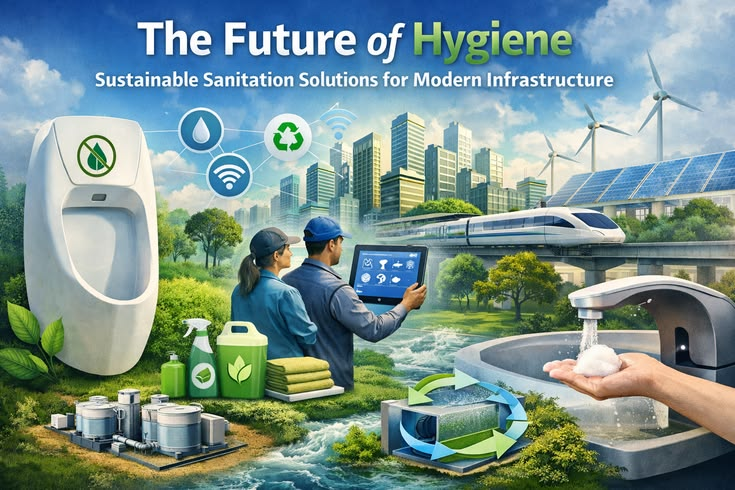
One of the biggest challenges traditional sanitation systems pose is the heavy consumption of water and harsh cleaning chemicals. In a country where water scarcity is becoming a pressing concern, institutions are realizing the need to rethink their sanitation strategies. Water-efficient technologies, such as waterless urinals, sensor-based fixtures, and advanced wastewater treatment systems, are slowly becoming part of modern building infrastructure. These innovations not only conserve thousands of liters of water every year but also significantly reduce operational costs.

Another important aspect of sustainable sanitation is the shift toward eco-friendly cleaning practices. Conventional cleaning agents often contain harmful chemicals that can affect indoor air quality and pollute water systems when discharged. Institutions are now exploring plant-based and biodegradable cleaning solutions that maintain hygiene standards while reducing environmental impact. This transition is particularly important in spaces like hospitals, schools, and childcare facilities where safety and health are critical.
Technology is also playing a crucial role in redefining sanitation practices. Smart monitoring systems, automated cleaning equipment, and IoT-enabled water management tools are helping facility managers track usage patterns and detect inefficiencies in real time. Many research institutions and engineering colleges across India are actively developing innovative sanitation technologies—from compact sewage treatment plants to odor-control solutions that improve restroom environments without relying on excessive chemical sprays.
Beyond technology, a cultural shift within institutions is equally important. Sustainable sanitation requires not just better infrastructure but also behavioral change. Employees, students, and visitors all play a role in maintaining hygienic environments. Awareness campaigns, sustainability policies, and green building certifications are encouraging organizations to adopt responsible practices that extend beyond compliance and move toward long-term environmental stewardship.
India’s institutions are now recognizing that sanitation is closely connected to broader sustainability goals, including climate action, water conservation, and public health. By investing in innovative sanitation technologies and eco-conscious hygiene practices, they are setting new standards for how shared spaces should function in a rapidly urbanizing world.
Conclusion
The transformation may still be evolving, but one thing is clear: sustainable sanitation is no longer an optional upgrade,it is becoming a defining feature of responsible institutions in India. And as more organizations adopt these practices, the ripple effect could reshape the future of hygiene infrastructure across the country, creating cleaner spaces while protecting the resources that sustain them.


Comments