

Water Conservation & Management in India

Water is at the center of India's environmental, economic, and social stability. From agriculture and urban development to industrial growth, every sector depends heavily on water. Yet, the gap between water availability and water demand is widening rapidly, driven by population growth, climate change, and decades of inefficient use. This imbalance has reached a critical point that demands immediate and sustained attention from all stakeholders — policymakers, industries, communities, and individuals alike.
Today, water conservation is no longer just a policy discussion — it is a practical necessity for governments, communities, and especially businesses. The consequences of inaction are visible in depleting aquifers, seasonal droughts, and the economic costs of water scarcity affecting millions of livelihoods. Organizations that understand this shift and act early are not only contributing to sustainability but also building efficient, future-ready operations that are resilient to resource constraints.
Understanding the Conservation of Water Resources
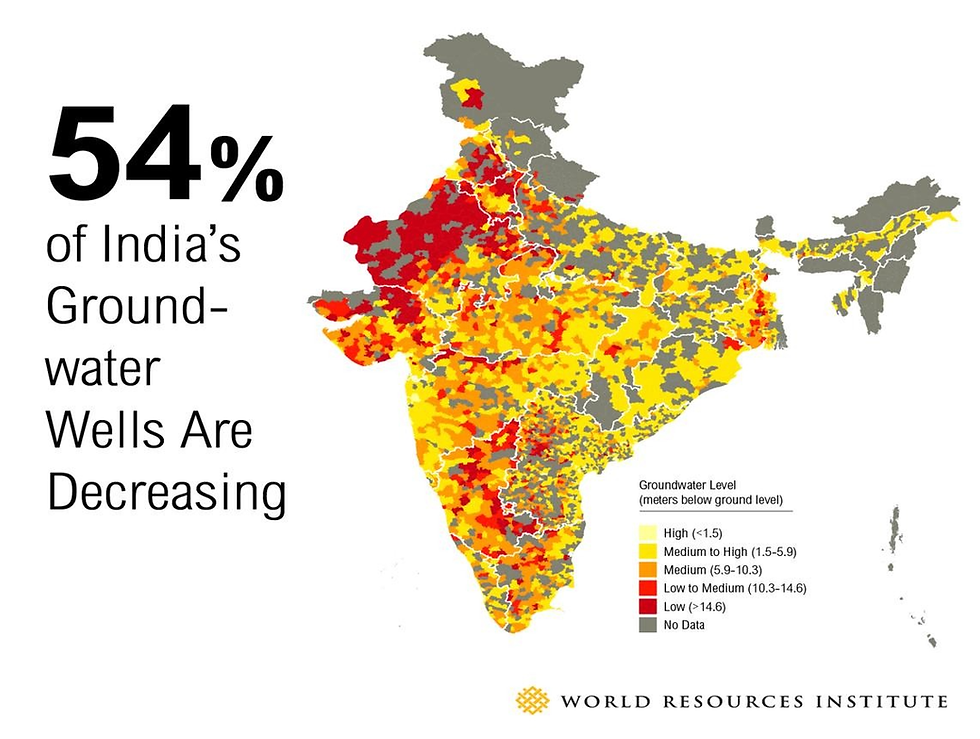
Resource: World Resources Institute
Water conservation refers to the planned and efficient use of water resources to reduce wastage and ensure long-term availability. In India, this involves managing multiple sources such as rivers, groundwater, rainwater, and recycled water. Each of these sources plays a critical role in sustaining agriculture, urban consumption, and industrial operations. Managing these diverse water bodies requires an integrated approach that accounts for seasonal variations, regional geography, and competing demands from different user groups.
Unlike earlier approaches that focused mainly on increasing supply through the construction of dams, canals, and reservoirs, modern water management emphasizes balancing demand and reducing unnecessary consumption. This demand-side shift is critical because natural water systems are already under immense pressure due to overuse, pollution, and climate variability. Instead of endlessly chasing supply, the smarter strategy is to eliminate inefficiencies, close leakages, and redesign systems so that every drop used delivers maximum value.
India's Water Problem
India is home to nearly 18% of the world's population but has access to only about 4% of global freshwater resources. This fundamental imbalance between population size and water availability creates a structural vulnerability that few other countries face at the same scale. Over the last decade, groundwater levels have declined significantly in many regions, especially in urban and industrial zones where extraction far exceeds natural recharge rates. States like Rajasthan, Haryana, Punjab, Gujarat, and parts of Maharashtra are already experiencing acute water stress that is affecting both agriculture and urban life.
Several interconnected factors contribute to this deepening crisis:
• Rapid urbanization is increasing water demand across cities and peri-urban areas
• Over-extraction of groundwater for agriculture, industry, and municipal use
• Inefficient water infrastructure with high distribution losses
• Climate change is affecting rainfall patterns, causing both floods and droughts
• Pollution of rivers and lakes is reducing the volume of usable freshwater
• Lack of adequate wastewater treatment and reuse systems
As a result, many cities face severe seasonal shortages during summer months, and industries increasingly depend on expensive external water sources such as tankers and treated water procurement. This raises both operational costs and supply chain risks. For businesses, this is no longer just an environmental concern — it is a financial and operational risk that requires proactive mitigation strategies.
Importance of Water Conservation in India
Water conservation is essential not only for environmental reasons but also for economic stability and social well-being. The availability of clean, reliable water underpins food security, public health, industrial productivity, and quality of life. When water becomes scarce or unreliable, the ripple effects are felt across every dimension of the economy — from rising food prices due to crop failures, to business disruptions caused by supply shortages.
The current water reality in India paints a sobering picture:
Only a small percentage of total water is usable freshwater for drinking and daily use
A large portion of water is either saline, polluted, or inaccessible due to geographic constraints
Per capita water availability has declined significantly over the past decade as the population grows and sources deplete
Groundwater levels have dropped in many regions due to overuse, with several states classified as over-exploited
Seasonal rivers and wetlands are shrinking, reducing the natural water storage capacity of entire regions
This means that while water physically exists in India, usable and accessible water is limited and shrinking year by year. Conservation becomes absolutely critical to ensure that future demand can be met without exhausting natural resources or triggering social conflict over water access. Proactive conservation today is an investment in economic stability and ecological resilience for tomorrow.
Water Accessibility and Urban Water Use
Urban India faces a unique and growing challenge — high population density combined with chronically limited water infrastructure. Cities rely heavily on groundwater extraction and tanker supply chains, both of which are expensive, unreliable, and environmentally damaging. The municipal water systems in most Indian cities were designed for far smaller populations and have not kept pace with rapid urbanization, leading to inconsistent availability, low pressure, and frequent supply disruptions, particularly in peripheral and low-income neighborhoods.
In commercial buildings — offices, malls, hospitals, hotels, and educational institutions — water is used continuously across restrooms, cooling systems, cafeterias, and maintenance activities throughout the day. Much of this usage goes unmonitored and unmetered, making it invisible and therefore unmanaged. High footfall buildings can consume tens of thousands of liters daily from restrooms and sanitation systems alone, representing a significant and addressable source of waste. Making urban water management a strategic priority, rather than an afterthought, is one of the most effective steps that commercial property owners and facility managers can take.
Water Use in Agriculture
Agriculture remains the largest consumer of water in India, accounting for approximately 80–90% of total freshwater usage. This extraordinary demand makes agricultural water management one of the most important fronts in India's conservation effort. Traditional irrigation methods such as flood irrigation — where water is released across fields with minimal control — often lead to massive losses through evaporation, surface runoff, and deep percolation, with much of the water never reaching the crop roots where it is needed.
Improving irrigation efficiency through scientifically designed methods like drip irrigation, sprinkler systems, and precision farming can significantly reduce the pressure on water resources while maintaining or even improving agricultural productivity. Drip irrigation, for example, delivers water directly to the root zone of plants in precise quantities, reducing water use by 30–50% compared to conventional methods. Better crop planning, soil moisture monitoring, and weather-based irrigation scheduling can further optimize water use in ways that benefit both farmers and the broader water ecosystem.
Traditional Water Storage Systems in India

Resource: Traditional Water Storage
India has a remarkably rich history of traditional water conservation systems developed over thousands of years in response to regional climate conditions and water scarcity challenges. These include stepwells (baolis), tanks (talavs), check dams (johads), and subterranean storage channels (kunds), each designed to capture rainwater, store it effectively, and allow it to percolate into the ground to recharge local aquifers. Communities across Rajasthan, Gujarat, Tamil Nadu, Karnataka, and Maharashtra developed sophisticated water harvesting architectures that sustained entire civilizations through dry seasons and multi-year droughts.
Reviving and integrating these time-tested traditional methods with modern infrastructure and technology can play a key role in sustainable water management. Many of these structures still exist but have been neglected or encroached upon. Restoring them through community involvement, government support, and scientific assessment can quickly improve local water availability, reduce groundwater depletion, and strengthen ecological resilience in water-stressed regions.
Exploring Various Methods of Water Conservation in India
Water conservation methods in India can be broadly divided into two complementary categories that together form the foundation of a comprehensive conservation strategy:
Supply-side methods: focused on increasing water availability through harvesting, storage, and recharge
Demand-side methods: focused on reducing water usage through efficiency improvements and behavioral change
Both approaches are critically important and work best when implemented together. However, modern water management strategies increasingly prioritize reducing unnecessary consumption, especially in urban and commercial settings where per-unit savings are most cost-effective and can be scaled rapidly. Demand-side measures often deliver faster results with lower capital investment compared to large-scale supply infrastructure, making them especially attractive for businesses and urban planners working within tight timelines and budgets.
Different Methods of Water Conservation in India
Common methods of water conservation in India include rainwater harvesting, which collects and stores precipitation for reuse; groundwater recharge, which restores depleted aquifers through engineered infiltration systems; reuse of treated wastewater for non-potable applications like irrigation and industrial cooling; and efficient irrigation systems that minimize agricultural water loss. Additionally, leak detection and repair programs, metering and monitoring systems, and public awareness campaigns play crucial roles in reducing systemic water losses across urban and rural settings.
While these methods are well-established and effective, they often require significant infrastructure investment, regulatory approvals, and considerable lead time before results are visible. For businesses seeking immediate impact, combining long-term infrastructure improvements with high-impact operational changes — such as upgrading sanitation fixtures, fixing internal leakages, and switching to low-consumption technologies — delivers faster and more measurable results. The key is to act on multiple fronts simultaneously, addressing both the systemic and the operational causes of water waste.
How Much Water Does a Commercial Building Waste Every Day? (And How to Cut It in Half)

Commercial buildings are among the most significant and often underestimated contributors to urban water waste. In high-footfall environments such as corporate offices, shopping malls, airports, stadiums, and hospitality venues, restroom sanitation systems operate continuously throughout operational hours. Conventional urinals alone can consume anywhere from 3 to 8 liters of water per flush, and in a building with hundreds of daily users cycling through restrooms multiple times, this translates to thousands of liters wasted every single day — purely on sanitation systems that can be redesigned or replaced.
Reducing this systemic waste requires a focused strategy that targets the systems operating continuously rather than those used only occasionally. By replacing inefficient fixtures with low-flow alternatives, installing sensor-based flush systems, and adopting advanced water-saving technologies — including waterless solutions where applicable — businesses can significantly cut their total water consumption. In many documented cases across Indian commercial buildings, eliminating water usage in specific high-consumption applications has reduced overall daily wastage by up to 50%, delivering both environmental benefits and substantial cost savings on utility bills.
India's Water Crisis: What Businesses Can Do Right Now
Businesses across India can and must play a crucial role in addressing water scarcity, and the good news is that meaningful action does not require waiting for large-scale infrastructure changes or government mandates. Companies can begin immediately by conducting a thorough water audit to identify their highest-consumption areas, understanding where waste occurs, and mapping the financial and operational risks of water scarcity on their specific operations. This diagnostic step alone often reveals surprising inefficiencies that can be addressed with low-cost, high-impact interventions.
Practical steps include improving sanitation systems through upgraded fixtures and technologies, repairing internal leakages through systematic inspection and maintenance programs, training facility management teams to monitor water usage actively, and adopting technologies that minimize or eliminate water usage in non-essential applications. Such actions simultaneously conserve water, reduce operational costs, improve sustainability credentials, and demonstrate corporate responsibility to stakeholders, customers, and regulators — all of which increasingly value and reward genuine environmental stewardship.
Jal Shakti Abhiyan and What It Means for Corporate Buildings

The Jal Shakti Abhiyan, launched by the Government of India, represents one of the most ambitious national missions to address water scarcity through community participation, infrastructure development, and behavioral change. The campaign emphasizes the importance of water conservation across all sectors — urban, rural, agricultural, and industrial — and encourages widespread adoption of rainwater harvesting, groundwater recharge, and efficient water use practices. It also focuses on rejuvenating traditional water bodies and creating water management awareness at the grassroots level.
For corporate buildings, the Jal Shakti Abhiyan is not merely a government initiative to observe from a distance — it signals a clear national direction toward stricter water governance and accountability. Aligning corporate operations with the program's priorities means proactively adopting sustainable practices, investing in water-efficient technologies, participating in community water initiatives, and reducing the water dependency of facilities. Companies that align early will be better positioned when regulations around commercial water use tighten, which is an increasingly likely development given the scale of India's water crisis.
Central Government Initiatives for Water Conservation
The Government of India has launched a comprehensive set of national initiatives to address water scarcity at scale. These include the Atal Bhujal Yojana for community-based groundwater management in water-stressed regions, the Pradhan Mantri Krishi Sinchayee Yojana (PMKSY) focused on irrigation efficiency and the principle of 'More Crop Per Drop', the National River Conservation Plan for rejuvenating polluted rivers, and the Namami Gange programme for holistic Ganga basin management. Together, these programs form an interlocking framework that addresses water from multiple angles — source protection, efficient use, recharge, and ecological restoration.
These central government initiatives are designed to create a comprehensive national framework for water conservation that encourages active participation from industries, communities, local bodies, and institutions. For businesses, engaging with these programs — either through direct participation, corporate social responsibility contributions, or by aligning internal water management practices with program goals — creates both social value and regulatory goodwill that can be significant in the long term.
State Government Initiatives for Water Conservation
Recognizing that water challenges vary significantly by geography, climate, and land use patterns, state governments across India have introduced region-specific programs to address their unique local water challenges. Maharashtra's Jalyukt Shivar Abhiyan focused on making villages water-independent through watershed development. Tamil Nadu has pioneered rainwater harvesting mandates in urban buildings. Rajasthan has invested in the revival of johads and traditional step-wells. Andhra Pradesh and Telangana have developed mission-mode watershed programs targeting millions of hectares of degraded land.
These state-level programs include watershed development in agricultural zones, urban water management plans for tier-1 and tier-2 cities, and targeted conservation awareness campaigns tailored to regional needs, languages, and cultural contexts. Businesses operating in specific states should familiarize themselves with applicable state-level water regulations, incentive programs, and conservation mandates, as these can significantly affect operational compliance requirements and create opportunities for subsidized adoption of water-efficient technologies.
Rooftop Rain Water Harvesting Initiatives
Rooftop rainwater harvesting allows buildings — whether residential, commercial, or industrial — to capture precipitation falling on their rooftops and store or channel it for future use. This collected water can be used directly for non-potable purposes such as toilet flushing, irrigation, and cooling systems, or it can be treated and filtered for potable use. More significantly, well-designed harvesting systems allow collected water to be directed into recharge pits or bore wells, actively replenishing local groundwater levels and helping reverse the aquifer depletion that threatens urban water supplies.
Many Indian states and municipalities have made rooftop rainwater harvesting mandatory for new constructions above a certain floor area, and several offer subsidies or reduced property tax rates for buildings that implement certified systems. For commercial building owners and operators, installing or upgrading rainwater harvesting infrastructure is both a regulatory compliance step and a practical investment that reduces dependence on municipal supply and tanker water, lowering long-term operating costs.
Recharge of Groundwater Initiatives
Groundwater recharge projects focus on systematically restoring underground water levels through engineered systems such as recharge pits, percolation tanks, check dams, and natural infiltration zones. These systems intercept surface runoff — rainwater and treated wastewater that would otherwise flow away — and allow it to gradually seep into the earth, replenishing aquifers that have been depleted by decades of extraction. In areas where geological conditions are favorable, even relatively small recharge structures can have a significant and measurable positive impact on local water tables within one to three monsoon seasons.
Revival of Traditional Water Bodies
Restoring lakes, ponds, stepwells, and other traditional water bodies is one of the highest-impact and most ecologically sound approaches to improving water availability in both urban and rural areas. These water bodies serve as natural reservoirs that store monsoon rainfall, support aquifer recharge, maintain local biodiversity, and moderate the urban heat island effect in cities. Decades of encroachment, pollution, and neglect have severely reduced their capacity and ecological function, but restoration — when done properly with community involvement and scientific guidance — can return them to productive use within a relatively short period.
Awareness Generation Initiatives
Public awareness campaigns play a foundational role in driving the behavioral changes necessary for effective water conservation at scale. Technical solutions and infrastructure improvements are important, but their full potential can only be realized when individuals, households, businesses, and communities actively participate in responsible water use. Awareness programs that connect water conservation to everyday actions — like fixing dripping taps, reducing shower times, choosing water-efficient appliances, and reporting leakages — can produce significant aggregate savings when adopted widely across a population.
Small River Rejuvenation Initiatives
Rejuvenating small rivers, streams, and seasonal water channels is a crucial but often overlooked aspect of India's broader water conservation strategy. Small rivers serve as the circulatory system of regional water networks — they connect mountains, forests, wetlands, and agricultural plains, distributing water across landscapes and sustaining local ecosystems. When these rivers are degraded through sand mining, encroachment, deforestation, or pollution, the entire regional water cycle is disrupted, leading to more severe floods during monsoons and more extreme droughts in dry seasons.
Water Use Efficiency Initiatives
Improving efficiency in water usage across agriculture, industry, and urban sectors is one of the most cost-effective and rapidly scalable approaches to reducing overall water demand without compromising economic output or quality of life. Water use efficiency initiatives encompass a wide range of technologies and practices — from smart irrigation controllers and soil moisture sensors in agriculture, to water-efficient cooling towers and closed-loop industrial water systems, to low-flow fixtures and real-time consumption monitoring in buildings and institutions.
Water Conservation in Hilly Areas
Hilly and mountainous regions of India present unique water management challenges that require approaches distinct from those applicable in plains or coastal areas. Special conservation initiatives in these regions focus on managing stormwater runoff to prevent erosion, constructing contour trenches and check dams to slow water flow and encourage infiltration, and implementing reforestation programs that improve soil water retention. Spring shed management — protecting and restoring the catchment areas that feed natural springs — is particularly important in hill communities that depend on springs as their primary drinking water source.
Reuse of Treated Water Initiatives
Reusing treated wastewater — also called water recycling or reclaimed water use — is one of the most powerful tools available to reduce freshwater demand and close the urban water cycle. Rather than treating wastewater to a basic level and discharging it into rivers or the sea, advanced treatment technologies can produce water of sufficient quality for a wide range of non-potable uses: industrial cooling, toilet flushing, construction, horticulture, street washing, and even groundwater recharge. In some advanced systems, reclaimed water is treated to drinking water standards, dramatically reducing dependence on freshwater sources.
Leadership of Women Communities / WUAs / SHGs in Water Conservation
Community participation is the bedrock of effective water resource management, particularly at the local level, where centralized systems and government programs often reach imperfectly. Women-led groups — including Self-Help Groups (SHGs), Water User Associations (WUAs), and community water committees — have demonstrated remarkable effectiveness in managing local water resources, promoting conservation practices, and ensuring equitable distribution of available water. Research across India and developing countries consistently shows that when women are empowered as decision-makers in water management, outcomes improve significantly in terms of both efficiency and equity.
Initiatives for School Children on Water Conservation
Educating children and young people about water conservation is a long-term investment in cultural change that can yield results extending decades into the future. School-based water education programs that combine scientific understanding of the water cycle and water scarcity with practical conservation habits — like turning off taps, reporting leaks, and understanding where water comes from — shape attitudes and behaviors that students carry into adulthood and pass on to their own families and communities. Several state governments have integrated water literacy into their school curricula, and organizations partnering with schools on awareness campaigns often find that children become effective ambassadors for conservation practices within their households.
Harnessing the Potential of Startups for Innovative Water Solutions
India's growing startup ecosystem is producing a new generation of water technology innovators who are developing solutions that challenge traditional approaches and dramatically improve water efficiency and accessibility. Startups are developing smart water meters that provide real-time consumption data to building managers, sensor networks for early leak detection in distribution systems, low-cost water treatment technologies for rural communities, AI-powered irrigation platforms that optimize water scheduling based on weather and crop data, and advanced waterless sanitation systems that eliminate water use in specific applications entirely.
Intensive Afforestation Initiatives
Afforestation — the large-scale planting of trees and restoration of forest cover — is one of the most ecologically effective long-term strategies for improving water availability and groundwater recharge. Trees play a critical and often underappreciated role in the water cycle: their root systems create channels in the soil that allow rainwater to infiltrate deeply rather than running off the surface, their leaf litter and organic matter improve soil water-holding capacity, and their canopy reduces evaporation from the ground. Forests also regulate regional precipitation patterns and maintain the ecological conditions that sustain rivers and springs.
Water Loss Minimization: Leak Management

Leakages are one of the most pervasive, costly, and frequently overlooked sources of water loss in both municipal water distribution networks and commercial building plumbing systems. Studies consistently show that Indian cities lose between 30–50% of their total water supply through leaks in aging pipes, faulty joints, and poorly maintained infrastructure before the water ever reaches end users. Within commercial buildings, internal plumbing leakages — from pipe connections, valve seals, toilet cisterns, and fixture fittings — can silently waste thousands of liters daily without being noticed by facility managers who lack adequate monitoring systems.
Effective leak management requires a systematic and technology-driven approach. This includes installing water meters at multiple points within a building to detect discrepancies that indicate leakage, conducting regular acoustic or pressure-based leak detection surveys on distribution mains, establishing preventive maintenance schedules for all water-bearing systems, training facility management teams to identify and report leaks promptly, and using smart building management systems that provide real-time alerts when consumption patterns deviate from established baselines. The economics of leak management are extremely compelling — the cost of detection and repair is almost always a fraction of the cost of the water being lost.
Groundwater Usage Status (According to the 2024 Report)
Recent government and independent reports on India's groundwater status paint a concerning picture that underscores the urgency of conservation action at every level. According to the 2024 assessment, groundwater extraction in many parts of India — particularly in the agriculturally intensive states of Punjab, Haryana, Rajasthan, and parts of Uttar Pradesh and Maharashtra — far exceeds sustainable annual recharge rates. Several hundred assessment blocks across these states are officially categorized as 'over-exploited', meaning annual extraction exceeds the natural recharge potential, leading to a structural and accelerating decline in water table levels.
The implications of this over-exploitation are profound and far-reaching. Farmers must drill progressively deeper wells at higher cost, increasing agricultural production expenses and reducing the viability of smallholder farming. Urban areas dependent on groundwater face increasing supply insecurity and rising costs. Ecosystems dependent on groundwater discharge — springs, wetlands, and shallow rivers — are threatened. And the energy required to pump water from ever-greater depths increases substantially, adding to both costs and carbon emissions. Without urgent and coordinated conservation and recharge efforts, these trends will intensify.
How to Reduce Water Bills in Offices, Malls & Hotels by 50%
Achieving 50% reductions in water bills for commercial facilities is not an aspirational goal — it is a well-documented outcome that many businesses across India and globally have already achieved through systematic water management programs. The first step is conducting a comprehensive water audit that maps consumption by source, by use category, by floor and department, and by time of day. This granular data reveals where water is being used, how much, and whether the usage level is proportionate to operational needs. In most commercial buildings, this audit reveals that restrooms and sanitation systems account for the largest share of discretionary water use.
By upgrading restroom infrastructure with low-flow faucets, dual-flush toilets, sensor-based taps, and waterless urinals, businesses can typically achieve 30–50% reductions in restroom water consumption alone. Adding leak detection and repair programs, rainwater harvesting for non-potable applications, and optimized cooling tower water management can push total savings beyond 50% in many facilities. These improvements typically pay for themselves within 12–36 months through reduced utility bills, and they deliver ongoing savings for the lifetime of the installation — making water efficiency one of the highest-return infrastructure investments available to commercial property managers.
Rainwater Harvesting vs. Waterless Sanitation: Which Saves More?

Both rainwater harvesting and waterless sanitation address India's water crisis from different angles and operate on different timescales, making them complementary rather than competing strategies. Rainwater harvesting increases water availability by capturing precipitation that would otherwise be lost to runoff, effectively adding a new source of supply for building operations. Waterless sanitation, by contrast, reduces water demand by eliminating water usage in specific high-consumption applications such as urinal flushing, potentially saving thousands of liters per day in a busy commercial building.
From a cost-benefit perspective, waterless sanitation systems often deliver faster and more predictable results, particularly in high-footfall environments where savings are proportional to usage volumes. Rainwater harvesting depends on seasonal precipitation patterns and requires adequate storage infrastructure, which can be a limitation in regions with irregular or concentrated rainfall. However, combining both strategies provides the most effective and resilient solution — reducing demand through waterless systems while simultaneously securing an additional source of supply through harvesting, creating a dual approach that maximizes both savings and water security.
Countering India's Water Problem
Effectively addressing India's water crisis requires a comprehensive and coordinated response that integrates policy action, technological innovation, infrastructure investment, and behavioral transformation at every level of society. There is no single solution — the crisis is too multifaceted, too geographically diverse, and too deeply embedded in economic and social structures to be solved by any single intervention. What is needed is a systems-level approach that aligns incentives across sectors, ensures that the true cost of water is reflected in pricing and policy, and creates enabling conditions for both large-scale infrastructure and grassroots innovation to flourish simultaneously.
The Israeli Agriculture Model
Israel's transformation from a water-scarce desert nation into a global leader in agricultural productivity and water efficiency offers a compelling model for what is achievable with the right combination of technology, policy, and institutional commitment. Israel pioneered drip irrigation technology — invented by Israeli engineer Simcha Blass in the 1960s — and has since developed a comprehensive national water management system that treats water as a precious national resource requiring careful accounting, efficient use, and continual technological improvement. Today, Israel reuses approximately 87% of its treated wastewater for agricultural irrigation, a figure that far exceeds any other country in the world.
Adopting elements of the Israeli model in Indian conditions — scaled and adapted for India's diverse geography, cropping systems, and socioeconomic contexts — can significantly improve water use efficiency at the farm level and across the urban-industrial water cycle. This includes investing in precision irrigation research and extension services, creating incentive structures that reward water efficiency, developing robust water pricing mechanisms that reflect scarcity, and building institutional capacity for integrated water resource management at the basin level.
Waterless Sanitation: A Practical Corporate Solution

Waterless sanitation solutions represent one of the most immediate and scalable opportunities for commercial buildings to dramatically reduce their water consumption and operating costs. Traditional urinal systems in commercial buildings consume between 3 and 8 liters of water per flush, and in facilities with high footfall — offices with hundreds of employees, shopping malls, airports, stadiums, or hotels — this translates to tens of thousands of liters of water used daily solely for urinal flushing. Waterless urinal systems, such as those developed by pioneering companies like Zerodor, eliminate this water use through advanced cartridge-based or membrane-based sealing technology that blocks odors without requiring any water flush.
These systems provide immediate, measurable water savings from the first day of installation, require minimal maintenance compared to conventional flushing systems, and are increasingly recognized as a best practice in sustainable building design and green building certification frameworks. The financial case is compelling: savings on water and sewage charges typically generate a return on investment within 12–24 months, after which the savings are pure operational cost reduction. This makes waterless sanitation not just an environmentally responsible choice, but a financially rational decision for any business serious about efficient facility management.
FAQs
What is the most effective way for corporates to save water?
→ Focus on high-consumption areas and eliminate unnecessary usage.
Why is water conservation a global issue?
→ Fresh water is very limited; only about 3% of all water on Earth is freshwater and suitable for human use.
How does water conservation impact ESG goals?
→ It directly improves environmental performance and supports measurable reporting.
What is waterless sanitation?
→ A system that operates without water while maintaining hygiene and efficiency.
Can water bills be reduced significantly?
→ Yes, by improving efficiency and upgrading infrastructure.
Conclusion
Water conservation in India requires a shift from awareness to action. By combining traditional methods with modern solutions and focusing on high-impact areas, businesses and communities can create meaningful change.
Organizations that take proactive steps today will not only contribute to solving the water crisis but also build sustainable, efficient, and future-ready operations.
Comments