

Drain Line Maintenance Without Chemicals: What Actually Works
The Traditional Approach is Broken
Blocked drains? Most people instinctively reach for quick fixes - acid-based cleaners, harsh chemicals, or ready-made solutions that promise instant results. And yes, in the moment, they seem to work. The blockage clears, the water flows, and the problem feels solved. But what we don’t see is the damage quietly building up beneath the surface. Over time, these aggressive chemicals start attacking the very system they are meant to fix. Pipes begin to corrode, especially in older plumbing, leading to leaks, cracks, and expensive repairs. What looks like a small shortcut today often turns into a long-term maintenance headache tomorrow.
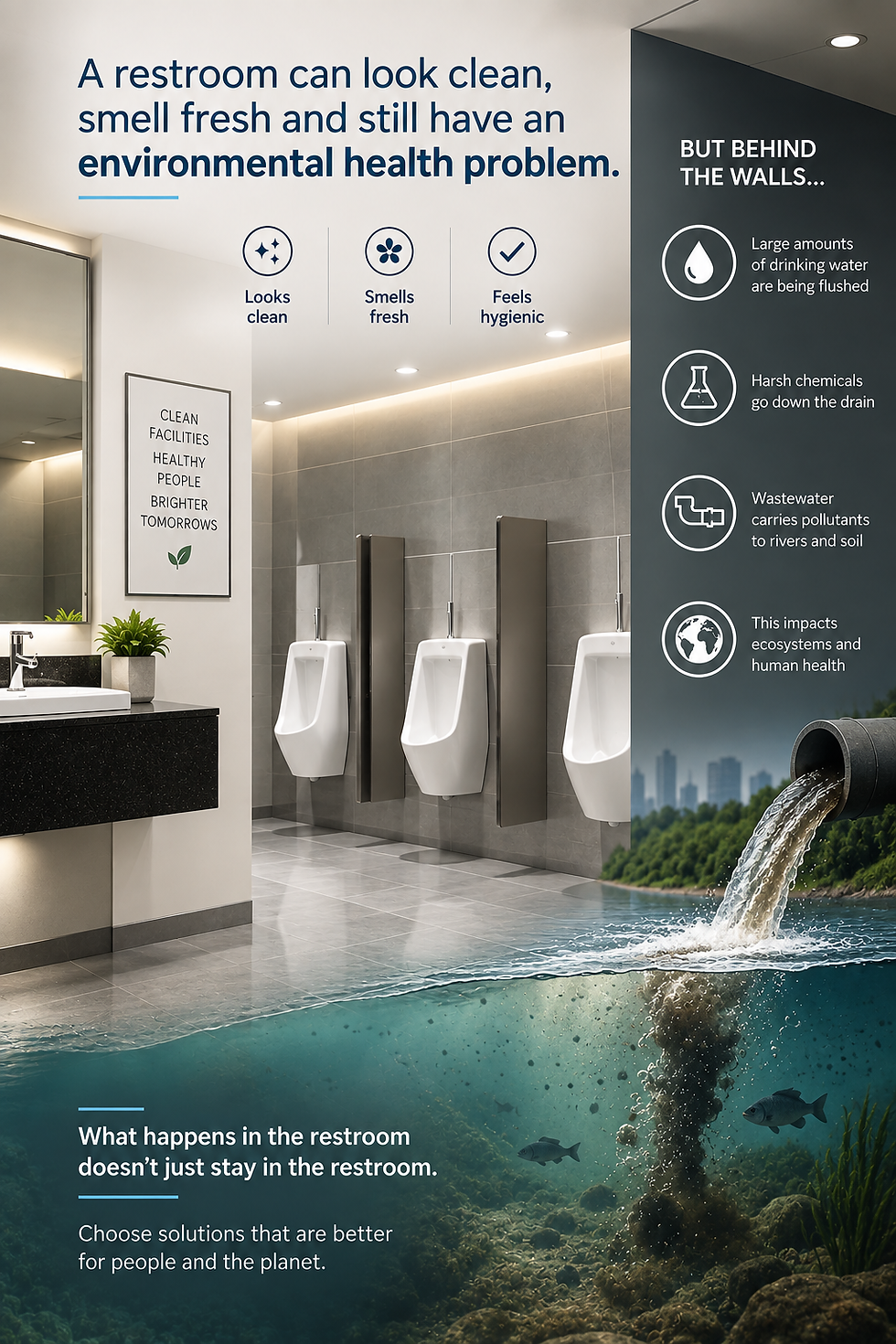
The impact doesn’t stop inside your building. These chemicals eventually enter sewage lines and treatment systems, where they disrupt the natural biological processes responsible for breaking down waste. This imbalance reduces the efficiency of treatment plants, making it harder to recycle and reuse water effectively. And then there’s the environmental cost. Toxic residues from these cleaners make their way into water bodies, affecting aquatic life and polluting ecosystems. A quick fix at one drain can ripple into a much larger environmental problem.
What feels like a simple solution… often ends up creating a much bigger issue.
Why Chemical Drain Cleaners Fail
Chemical drain cleaners often feel like the fastest solution when a blockage happens—but their impact goes far beyond that moment of relief. The reality is, they don’t fix the problem… they quietly make it worse over time.
Corrode pipelines : Most chemical cleaners are highly acidic or alkaline. While they break down visible clogs, they also react with the inner surface of pipes. Over repeated use, this weakens the material, leading to corrosion, cracks, and even leaks. What started as a simple blockage can eventually turn into costly plumbing repairs or replacements.
Kill beneficial bacteria : Drainage and sewage systems rely on natural bacteria to break down organic waste. These chemicals don’t differentiate, they kill everything in their path. As a result, the natural decomposition process slows down, allowing waste to accumulate more easily and disrupt the balance of the entire system, including treatment plants.
Cause long-term buildup : Ironically, instead of fully clearing the blockage, chemical cleaners often only partially dissolve it. The remaining residue can harden or combine with other waste over time, forming a tougher, more stubborn layer inside pipes. This leads to reduced flow and gradual buildup that’s harder to remove.
Lead to recurring blockages : Because the root cause, like grease accumulation, improper waste disposal, or lack of microbial activity, is never addressed, the problem keeps coming back. You end up using more chemicals again and again, creating a cycle of temporary fixes and worsening damage.

Chemical drain cleaners don’t solve the problem at its source. They simply mask it for a while , silently increasing maintenance costs, environmental harm, and system inefficiency.
A Smarter Way to Maintain Drain Health
Effective drain maintenance isn’t about force, it’s about consistency and balance. Instead of relying on aggressive, one-time fixes, a smarter approach focuses on keeping the system healthy every day. This is where enzyme-based solutions stand apart. Unlike chemical cleaners that react only after a blockage forms, enzyme-based solutions work continuously in the background. They introduce beneficial microbes and enzymes that naturally break down organic matter like grease, food particles, and biofilm before it has a chance to accumulate. It’s not a reaction - it’s a process.
Over time, this consistent breakdown prevents the formation of stubborn clogs and keeps the inner surfaces of pipes cleaner and smoother. The flow remains uninterrupted, and the system operates the way it was designed to , without stress or damage.
This preventive approach also reduces dependency on emergency interventions. No sudden blockages, no urgent chemical treatments, and no unexpected maintenance costs. Instead, you get a stable, self-sustaining drainage system that performs efficiently day after day.
In simple terms, it shifts the mindset from “fixing a problem” to “preventing it altogether.”
The Connection to Larger Systems
Drain lines are the first step in the wastewater journey. If they are not maintained properly, the entire sewage treatment system is affected. Poor inflow quality increases the load on STPs, reducing their efficiency and lifespan. By maintaining healthy drains, facilities can significantly improve the performance of their overall wastewater management systems.
Preventive vs Reactive Maintenance
Approach | Result |
Reactive (chemicals) | Temporary relief |
Preventive (enzymes) | Long-term efficiency |
Why It Matters for STPs
What happens in your drains doesn’t stay in your drains- it directly impacts the performance of your sewage treatment plant. When drain lines are healthy and free-flowing, the entire system benefits. Healthy drain lines mean better inflow quality. Instead of receiving a mix of partially dissolved chemicals, grease chunks, and toxic residues, the STP gets more uniform, biologically treatable wastewater. This makes the treatment process smoother and more predictable.
They also result in less system stress.

When harmful chemicals and heavy sludge loads are reduced, pumps, aeration systems, and biological reactors don’t have to work overtime. This lowers wear and tear, reduces downtime, and extends the lifespan of critical infrastructure. Most importantly, it leads to improved treatment efficiency. A balanced inflow supports microbial activity inside the STP, which is essential for breaking down waste effectively. The result? Better water quality output, easier compliance with standards, and greater potential for reuse.
Because in reality, everything is connected. A small decision at the drain level can either support or disrupt the entire treatment cycle.
Conclusion
The smartest maintenance strategy isn’t about reacting faster when something goes wrong - it’s about making sure things don’t go wrong in the first place. Prevention isn’t just cost-effective .. it’s sustainable.


Comments