

How Green Chemistry Is Revolutionizing Cleaning & Maintenance in India
A Slient Shift Is Happening
Across industries, a transformation is underway. Businesses are beginning to question the long-term impact of the chemicals they use daily. What was once considered standard practice is now being re-evaluated through the lens of sustainability. This shift is being driven by a growing awareness that cleaning should not come at the cost of health or environmental damage.
Across industries in India, a quiet but powerful transformation is underway.
The cleaning industry in India is undergoing a major transformation. What was once driven primarily by strong chemicals, artificial fragrances, and temporary results is now slowly shifting toward safer, smarter, and more sustainable solutions. At the center of this change is Green Chemistry , an approach that is redefining how industries, facilities, and institutions think about cleaning and hygiene.
Today, businesses are no longer looking only for “quick cleaning.” They are looking for solutions that are effective, safe for people, gentle on infrastructure, and responsible toward the environment. This shift is pushing the Indian cleaning industry toward a future built on innovation rather than chemical dependency. There’s a growing realization: Cleaning shouldn’t come at the cost of health or the environment.
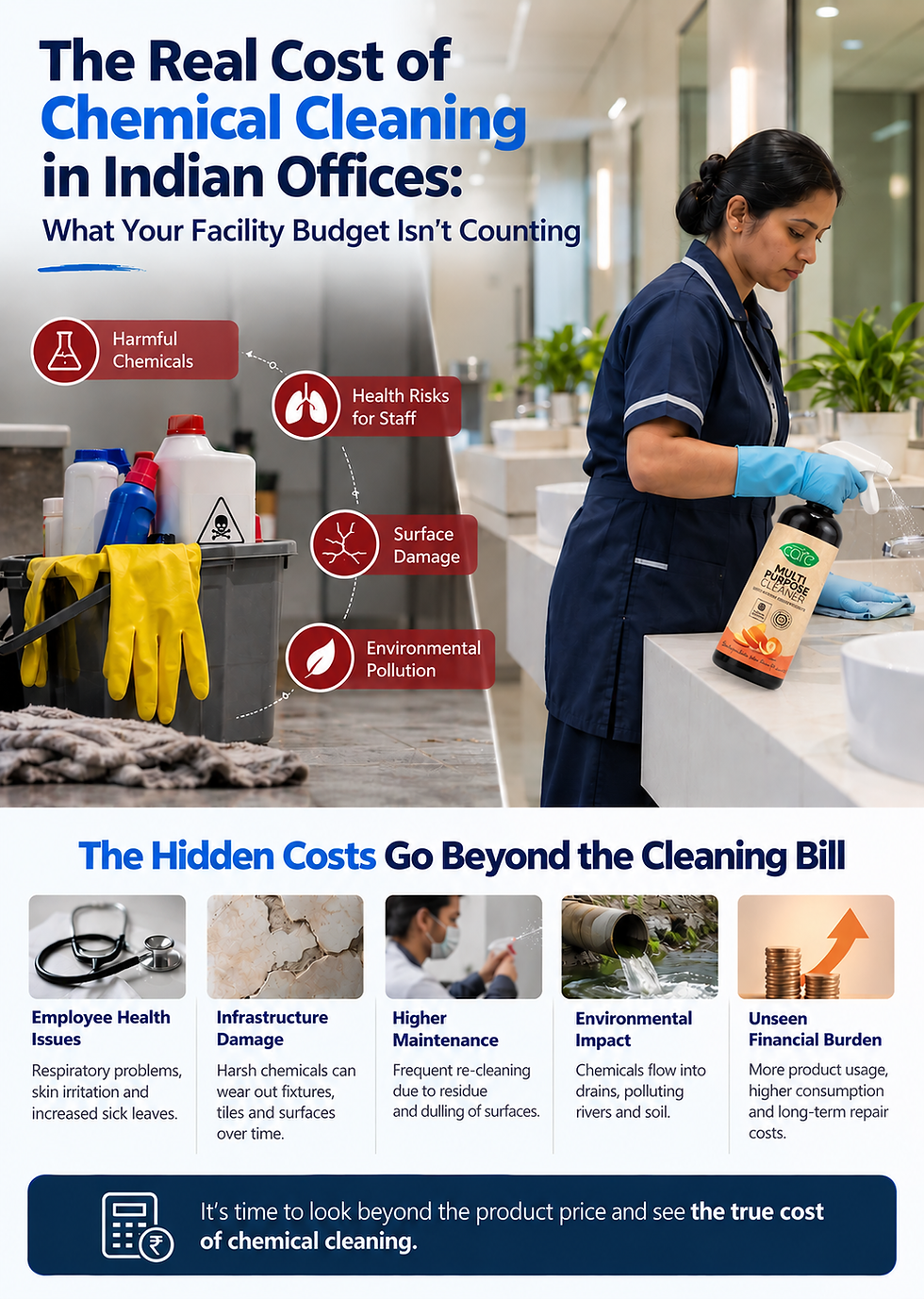
For decades, traditional chemical cleaners have been the go-to solution. They promise quick results-instant shine, immediate odor control, visible cleanliness. But behind that short-term efficiency lies a deeper, often ignored impact. These harsh chemicals don’t just disappear after use. They linger , in the air we breathe, on the surfaces we touch, and in the water systems we depend on. Over time, this leads to:
Indoor air pollution and respiratory concerns
Skin irritation and long-term health risks for cleaning staff
Corrosion of infrastructure and higher maintenance costs
Disruption of biological processes in sewage treatment plants (STPs)
Environmental contamination affecting ecosystems beyond the facility . And that’s where the shift begins.
Green chemistry is changing the game.
Instead of depending on aggressive chemicals that only provide temporary results, modern cleaning solutions are now being designed to work with nature rather than against it. These advanced formulations use biodegradable ingredients, enzymes, and beneficial microbes that naturally break down grease, dirt, organic waste, and odor-causing compounds at the source. Rather than masking the problem or damaging surfaces through corrosive reactions, they create a safer and more balanced cleaning process that supports long-term hygiene and maintenance.
This shift is changing the way industries think about cleanliness. Cleaning is no longer just about making a surface look visually clean for a short period of time. It is now about improving the overall health of the environment in which people work, live, and interact every day. Green cleaning solutions help create healthier indoor spaces by reducing chemical exposure, minimizing harmful fumes, and improving air quality for housekeeping staff, employees, residents, and visitors.
Another major advantage of bio-based cleaning systems is their ability to protect infrastructure instead of damaging it. Conventional chemical cleaners often weaken plumbing systems, increase pipe corrosion, and disturb the natural biological processes inside drainage networks and sewage treatment plants. In contrast, enzyme and microbial-based solutions continue working even after application, helping maintain cleaner pipelines, smoother water flow, and better STP efficiency without harming essential microbial activity.
As organizations become more conscious of environmental responsibility and ESG commitments, sustainable cleaning is quickly becoming the preferred standard across industries. From corporate offices and hospitals to residential complexes, malls, hotels, and industrial facilities, decision-makers are rethinking what “clean” truly means. Because today, cleanliness is no longer measured only by appearance it is measured by impact, safety, efficiency, and long-term responsibility. The brands that recognize this shift early are not just maintaining facilities; they are building healthier, smarter, and more future-ready ecosystems.
What Is Green Chemistry
Green Chemistry is transforming the cleaning industry by focusing on solutions that reduce or completely eliminate harmful chemicals without compromising cleaning performance. Instead of depending on corrosive acids, toxic solvents, or harsh disinfectants, green chemistry uses biodegradable ingredients, plant-based formulations, enzymes, and beneficial microbes that work naturally to break down dirt, grease, organic waste, and odor-causing compounds. The idea is not just to clean surfaces temporarily, but to create safer and more responsible cleaning systems that support both people and the environment.
The objective of green chemistry is simple ,clean effectively, reduce environmental impact, improve safety, and support long-term sustainability. This approach is becoming increasingly important across industries where excessive chemical usage can lead to health risks, poor indoor air quality, infrastructure damage, and environmental pollution. Businesses today are recognizing that sustainable cleaning solutions are not only better for the environment, but also help improve operational efficiency, workplace safety, and long-term maintenance practices.

Why Traditional Cleaning Methods Are Becoming a Challenge
For many years, the cleaning industry operated with the belief that stronger chemicals automatically meant better cleaning performance. As a result, highly acidic, alkaline, and heavily fragranced products became widely used across commercial and industrial facilities. While these products may deliver quick visible results, their repeated use often creates hidden long-term problems that are not immediately noticeable. Strong chemical fumes can contribute to poor indoor air quality, while prolonged exposure may lead to skin irritation, respiratory discomfort, and health concerns for housekeeping and maintenance staff who handle these products daily.
Beyond human health concerns, conventional chemical cleaners can also negatively impact infrastructure and wastewater systems over time. Corrosive formulations may gradually damage pipelines, weaken plumbing systems, and disturb the beneficial microbial balance required for efficient drainage and sewage treatment processes. The increased chemical load entering wastewater systems can further affect treatment efficiency and environmental safety. In large-scale facilities such as hotels, hospitals, airports, malls, and commercial buildings, these challenges become even more critical due to the volume and frequency of cleaning operations, often leading to higher maintenance costs, operational disruptions, and recurring infrastructure issues.
The Rise of Sustainable Housekeeping in India
India’s facility management and housekeeping industry is evolving at a rapid pace as businesses begin to rethink the way hygiene and maintenance are managed. Today, organizations are looking beyond traditional cleaning practices and focusing on solutions that deliver long-term value, operational efficiency, and safer environments. Modern businesses now prioritize hygiene systems that are not only effective in maintaining cleanliness but also aligned with ESG goals, environmental regulations, employee well-being, and responsible facility management practices.
This shift has created growing demand for bio-based cleaning products, enzyme-powered drain maintenance solutions, water-saving sanitation systems, low-toxicity housekeeping chemicals, and sustainable odor-control technologies. Industries are increasingly realizing that sustainable housekeeping is no longer just an optional or alternative approach it is becoming the future standard for smart and responsible facility operations. From corporate offices and hospitals to airports, malls, hotels, and residential complexes, organizations are adopting cleaner and safer technologies that improve hygiene while reducing environmental and operational impact.
How Green Cleaning Products Work Differently
Unlike conventional chemical cleaners that rely on harsh corrosive reactions to remove dirt and blockages, green cleaning products work through biological and environmentally safer processes. These solutions are designed to clean effectively without damaging surfaces, plumbing systems, or the surrounding environment. Instead of forcefully attacking the problem with strong acids or toxic compounds, they use natural mechanisms that break down waste gradually and safely at the source.
For example, enzymes naturally digest grease, proteins, starch, and organic waste, while beneficial microbes continue consuming the remaining buildup even after application. Bio-based formulations help reduce harmful chemical residues, minimize exposure to toxic fumes, and create safer indoor environments for both housekeeping staff and occupants. Similarly, sustainable odor-control technologies target the actual source of odor-causing compounds rather than simply masking smells with artificial fragrances. This creates long-term cleaning efficiency, healthier infrastructure, and more sustainable maintenance practices instead of temporary cosmetic results.
The Future of the Cleaning Industry in India
The future of cleaning will not be defined by stronger chemicals. It will be defined by smarter science. As awareness grows around water conservation, workplace safety, environmental responsibility, and operational efficiency, green chemistry is expected to become a core part of India’s cleaning ecosystem. Businesses are beginning to understand that sustainability and performance can work together. The next generation of cleaning solutions will focus on:
Preventive maintenance instead of reactive cleaning
Biological cleaning systems
Reduced water consumption
Safer workplaces
Lower environmental impact
Long-term infrastructure protection
This transition is not just changing products , it is changing the entire philosophy of cleaning.
EkamEco’s Vision for the Industry
At EkamEco, innovation has always been driven by the belief that cleaning solutions should solve problems without creating new ones. By focusing on environmentally responsible technologies, bio-based systems, and sustainable sanitation solutions, EkamEco aims to help industries move toward safer and smarter facility management practices. The future of cleaning is not about using more chemicals.It is about using better science, responsible innovation, and solutions designed for long-term impact.


Comments