

The True Cost of Chemical Cleaning: Health, Compliance & Environmental Risks
- bhumikat1
- May 9
- 3 min read
Introduction
Cheap cleaning chemicals may seem like a cost-effective choice in the short term, but they often carry hidden costs that businesses fail to account for. While they deliver quick results and lower upfront expenses, their long-term impact on health, the environment, and compliance can be significant. What appears to be a saving today can turn into increased medical issues, regulatory risks, and environmental damage tomorrow.
As organizations move toward stricter ESG standards and BRSR reporting, the true cost of these chemicals is becoming more visible. Companies are now expected to consider not just the price of products, but their full lifecycle impact, from usage and exposure to disposal and environmental consequences. This shift is forcing businesses to rethink their cleaning practices and evaluate whether low-cost chemicals are truly worth the risk.

Hidden Risks
Health
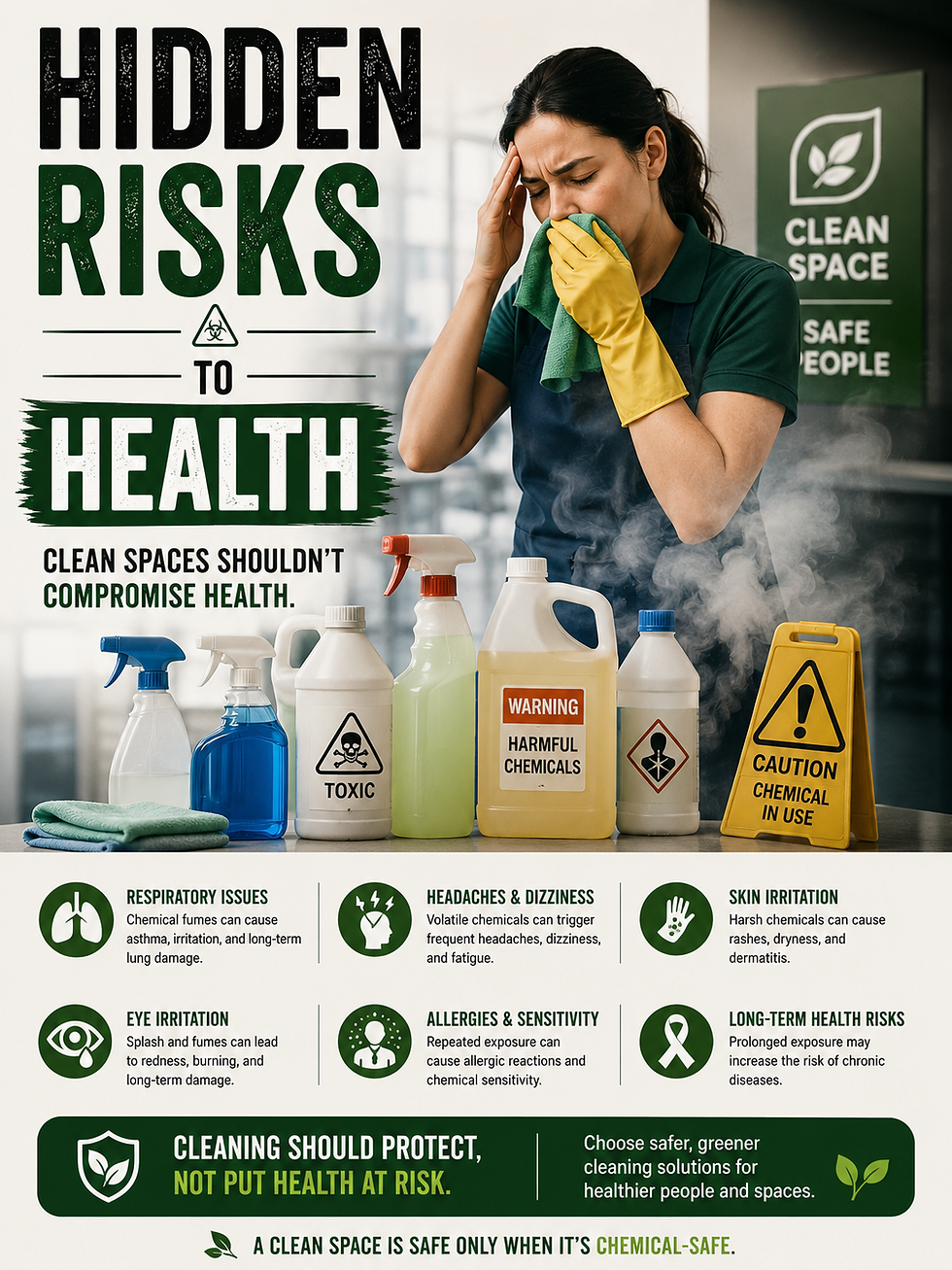
One of the most immediate risks of chemical-based cleaning products is their impact on human health. Many conventional cleaners contain harsh substances that can cause skin irritation, especially with repeated exposure. For housekeeping staff and facility workers, this can lead to long-term dermatological issues.
In addition to skin concerns, these chemicals often release fumes that can trigger breathing issues such as coughing, wheezing, and respiratory discomfort. In poorly ventilated indoor environments, prolonged exposure can worsen conditions like asthma or allergies, affecting both employees and visitors. Over time, this not only impacts well-being but can also reduce productivity and increase absenteeism.
Environmental
The environmental impact of cheap cleaning chemicals is equally concerning. When these substances are washed down drains, they often enter water systems without proper treatment, leading to contamination of natural water bodies. This can harm aquatic life and disrupt ecosystems, contributing to long-term environmental damage.
Toxic discharge from chemical cleaners also affects wastewater treatment processes. Harsh chemicals can interfere with biological treatment systems, reducing their efficiency and increasing the burden on sewage treatment plants. As environmental regulations become stricter, such practices can expose businesses to compliance risks and penalties, making the true cost of these chemicals far higher than their initial price.
Compliance
Beyond health and environmental concerns, the use of conventional chemical cleaners can create significant compliance challenges for businesses. Regulatory frameworks are becoming increasingly stringent, especially around chemical handling, wastewater discharge, and workplace safety. Companies that continue to rely on hazardous cleaning products risk non-compliance with environmental and occupational standards, which can lead to inspections, fines, or operational restrictions. What may seem like a routine operational choice can quickly turn into a legal and reputational issue if not managed properly.
In the context of ESG and BRSR reporting, these risks become even more critical. Poor chemical management can negatively impact environmental disclosures and social metrics related to employee health and safety. This can result in weaker ESG scores and reduced investor confidence. As stakeholders increasingly scrutinize sustainability practices, businesses must ensure that their cleaning processes align with compliance requirements and broader sustainability goals.
The Better Alternative
The shift toward green chemistry offers a safer and more sustainable path forward. Green cleaning solutions are designed to deliver effective results without relying on toxic ingredients. These formulations are typically non-toxic, biodegradable, and low in VOCs, ensuring minimal impact on both human health and the environment. By replacing harmful chemicals with safer alternatives, businesses can maintain hygiene standards while significantly reducing risks.
Sustainable cleaning solutions also support long-term operational efficiency. They are often easier to handle, require fewer safety precautions, and integrate seamlessly into modern facility management practices. More importantly, they align with ESG frameworks and BRSR reporting requirements, making it easier for organizations to demonstrate responsible chemical usage and environmental stewardship.
Business Impact
Switching to sustainable cleaning practices delivers tangible business benefits. One of the most important is reduced liability. By minimizing exposure to hazardous chemicals, companies lower the risk of workplace incidents, health-related claims, and regulatory penalties. This creates a safer environment for employees while protecting the organization from potential legal and financial consequences.
In addition, adopting green cleaning solutions improves the quality and credibility of ESG reporting. Lower chemical usage, reduced emissions, and safer working conditions contribute positively to sustainability metrics, strengthening overall disclosures. This enhances brand reputation, builds stakeholder trust, and positions the company as a responsible and forward-thinking organization.
Related: Green Cleaning & WELL Certification (Cluster 3)


Comments