

Care For Those Who Care For Our Spaces — Say No to Harmful Chemicals
A Labour Day Reflection on Dignity, Safety, and Responsibility
Every year, the world celebrates International Labour Day on 1st May- a day to recognize the contributions of workers across every sector.
Every day, before offices open and after everyone leaves, there are people who quietly make our spaces livable. Housekeeping staff, domestic helpers, and sewage workers. They clean our restrooms. They wipe our floors. They disinfect the surfaces we don’t think twice about touching. Some work inside our homes, others in commercial buildings, and some in the harshest sanitation environments beneath our cities.
They arrive early, stay late, and work in the margins of our schedules , often unseen, often unacknowledged. Their work is physical, repetitive, and essential. Because of them, our workplaces and homes feel safe, functional, and clean. Cities function because sewage workers keep systems running despite the risks involved. And yet, we rarely ask a simple question:
What are they breathing while doing this work?
We all value clean spaces , fresh floors, spotless washrooms, odor-free surroundings.But behind that cleanliness, there are people we rarely think about. House helpers. Housekeeping staff. Sewage and sanitation workers. They are the invisible force keeping our homes, offices, and cities functioning.And yet, they are often the most exposed to the harsh realities of cleaning.
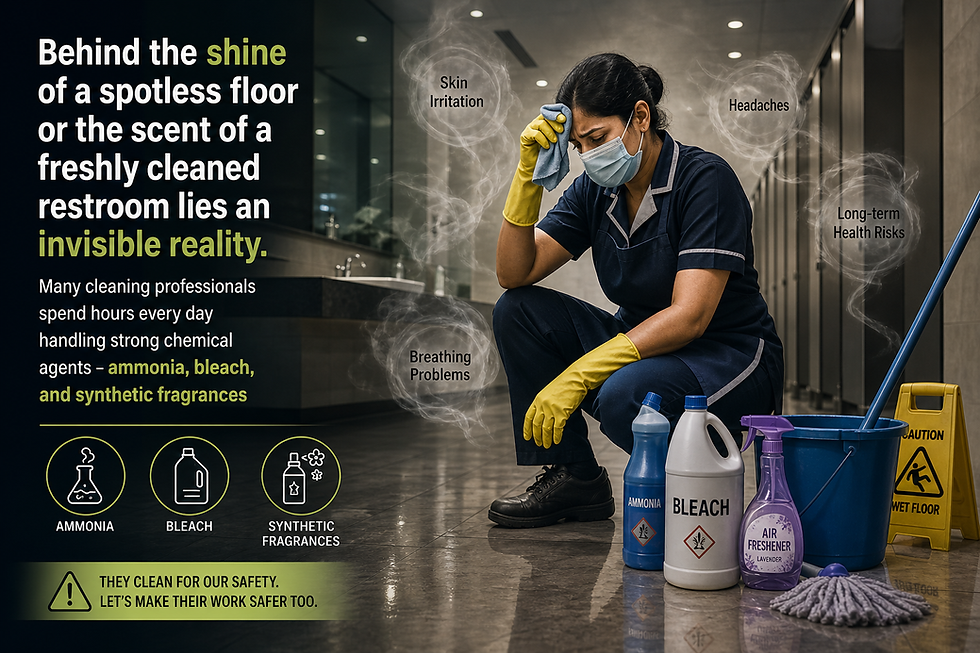
Behind the shine of a spotless floor or the scent of a freshly cleaned restroom lies an invisible reality. Many cleaning professionals spend hours every day handling strong chemical agents -ammonia, bleach, and synthetic fragrances - in enclosed spaces with limited ventilation. The very products meant to create “cleanliness” can expose them to harmful fumes. Over time, this exposure is not harmless. It can lead to breathing difficulties, skin irritation, dizziness, headaches, and long-term health risks that often go unnoticed until they become serious. And in many cases, this work is done without adequate protective gear or awareness of the risks involved.
What makes this harder to accept is that it is preventable.
Cleanliness should never come at the cost of someone else’s well-being. The people who care for our shared spaces deserve more than gratitude - they deserve safety, dignity, and thoughtful choices from all of us who benefit from their work.
Different Roles. Same Risk.
House Helpers (Domestic Workers) : They clean homes where ventilation may be limited. Constant exposure to chemical cleaners can lead to headaches, allergies, and long-term respiratory issues.
Housekeeping Staff (Commercial Spaces) : From malls to offices, they handle large-scale cleaning with industrial chemicals , often without proper protective gear or awareness of risks.
Sewage & Sanitation Workers : They face the toughest conditions , handling waste, toxic gases, and harmful microbes. For them, unsafe cleaning practices can be life-threatening, not just uncomfortable.
Why This Needs Urgent Attention
We talk about sustainability, green buildings, and ESG goals. But real sustainability isn’t just about saving water or reducing waste. It’s about protecting people. If the products and systems we use are harming the very people who maintain our hygiene, then we’re missing the point.

The Invisible Cost of Clean Spaces
Most cleaning professionals handle harsh chemicals every single day - ammonia, bleach, and synthetic fragrances - often in enclosed spaces with poor ventilation. What looks like a routine task is, in reality, repeated exposure to airborne toxins that linger long after the job is done. Without proper protective gear or adequate awareness, these workers inhale fumes that can irritate the lungs, burn the skin, and trigger immediate discomfort like headaches and nausea. Over time, this constant exposure can contribute to more serious, long-term health complications that are rarely acknowledged as part of the job.
What makes this cost invisible is that the results of their work are what we notice - the shine, the smell, the sense of cleanliness - while the impact on their health remains out of sight. The very standards we associate with “clean” often rely on chemical intensity rather than safety. But clean spaces should not come at the cost of someone else’s well-being. If a space is safe for us to occupy, it should also be safe for someone to clean - anything less is a compromise we can no longer afford to ignore.

What Health Problems Do They Face
Cleaning restrooms might look routine, but it exposes workers to a range of health risks-especially when harsh chemicals are used in enclosed spaces and protective gear is limited. One of the most common issues is respiratory problems. Fumes from products like ammonia and bleach can irritate the lungs, causing coughing, wheezing, shortness of breath, and in some cases worsening conditions like asthma. When these chemicals mix (even accidentally), they can release toxic gases that are even more dangerous to inhale.
Workers also frequently experience skin and eye irritation. Direct contact with strong cleaning agents can lead to rashes, burns, dryness, or allergic reactions. Splashes or fumes can irritate the eyes, causing redness, watering, and discomfort.
Another major concern is headaches, dizziness, and nausea, often triggered by strong chemical odors and poor ventilation. Many synthetic fragrances used to create a “fresh” smell can actually make these symptoms worse, especially with prolonged exposure.
Over time, repeated exposure can contribute to long-term health complications. These may include chronic respiratory conditions, increased sensitivity to chemicals, or ongoing skin issues. In some cases, workers may not immediately connect these health problems to their daily work environment, which makes the risk even more invisible.
Beyond chemical exposure, there are also physical health risks. Constant bending, scrubbing, and lifting can lead to back pain, joint strain, and muscle fatigue. Wet floors increase the risk of slips and falls, adding another layer of danger to the job. Put simply, maintaining clean restrooms often comes with hidden health costs. Without safer products, proper training, and protective measures, the people doing this essential work are left to bear risks that can , and should, be prevented.
Labour Day Is Not Just About Appreciation — It’s About Action
On Labour Day, we celebrate the people who keep our workplaces running - often quietly and without recognition. Messages of gratitude are shared, and for a moment, their contributions come into focus. But appreciation, when it remains only in words, falls short. If we truly value the people who maintain our environments, our respect has to show up in the systems we support and the choices we make every day.
That means asking harder, more meaningful questions. Are we providing cleaning staff with safer, non-toxic products? Are we actively reducing their exposure to harmful chemicals? Are we ensuring proper ventilation, training, and protective measures? Because dignity at work is not just about fair wages or recognition - it is about the fundamental right to a safe and healthy workplace. Real respect is not just expressed; it is practiced.
A Better Way Forward
The solution isn’t to stop cleaning. It’s to clean smarter and safer.
Use non-toxic, biodegradable cleaning solutions
Reduce dependency on harsh acids and chemicals
Adopt odor-control systems that don’t rely on fumes
Implement safer sewage treatment and handling practices
Prioritize worker safety as part of sustainability goals
This is where solutions like Zerodor Care Natural Products make a real difference.
By replacing chemical-heavy cleaners with plant-based, non-toxic alternatives, they help reduce harmful exposure for housekeeping staff, domestic helpers, and sanitation workers—without compromising on effectiveness. Odor control without toxic fumes, and biological treatment methods instead of harsh chemicals, create cleaner spaces that are safer for the people maintaining them. Because the future of cleaning isn’t just effective , it’s responsible.

Because Clean Should Never Hurt
The next time you walk into a clean washroom or a spotless office, pause for a moment and look beyond what you see.The shine on the floor, the freshness in the air, the hygiene you experience , it didn’t happen on its own. Someone made that possible.
Someone spent hours ensuring that space feels safe and comfortable for you.And while the results are visible, their effort ,and often their exposure , is not. They deserve more than just appreciation at a distance.They deserve safe working conditions, healthier products, and systems that don’t put their well-being at risk every single day. Because dignity in work isn’t just about wages or recognition , it’s about ensuring that the work itself does not harm them.
Conclusion
Care for those who care for your spaces.
Because true cleanliness goes beyond what meets the eye.It’s not just about how a place looks or smells , it’s about how it impacts the people who maintain it. When we choose safer products, responsible systems, and conscious practices,we don’t just create cleaner spaces , we create a safer, more humane environment for everyone involved.


Comments