

How Commercial Buildings Can Cut Water & Maintenance Costs by 50%
In rapidly growing cities, buildings are no longer just structures made of concrete and steel- they are complex systems that consume large amounts of water, energy, and resources every day. Offices, malls, hospitals, and residential complexes depend on efficient infrastructure to function smoothly. With the rise of sustainable architecture, commercial buildings are showing that it is possible to reduce water consumption and maintenance costs significantly , sometimes by as much as 50%while also protecting the environment
Green buildings are designed with efficiency and sustainability at their core. Instead of relying on traditional systems that often lead to excessive resource use, these buildings incorporate smarter solutions that optimize water management, sanitation, and operational efficiency. In India, certifications such as Indian Green Building Council and global frameworks like Leadership in Energy and Environmental Design have encouraged developers and institutions to rethink building design and maintenance from a sustainability perspective.
One of the biggest contributors to cost savings in green buildings is efficient water management. Conventional buildings use large volumes of water for restrooms, cooling towers, landscaping, and cleaning activities. Green buildings reduce this demand through solutions such as low-flow fixtures, sensor-based taps, waterless urinals, rainwater harvesting systems, and greywater recycling ( STP ) . These technologies significantly cut daily water consumption while lowering water bills and reducing dependence on municipal water supply.

Rainwater harvesting is another effective feature in sustainable infrastructure. Instead of allowing rainwater to run off and go to waste, buildings capture and store it for non-potable purposes such as flushing, cleaning, and gardening. Over time, this practice can save thousands of liters of water annually and help buildings become more resilient during water shortages.
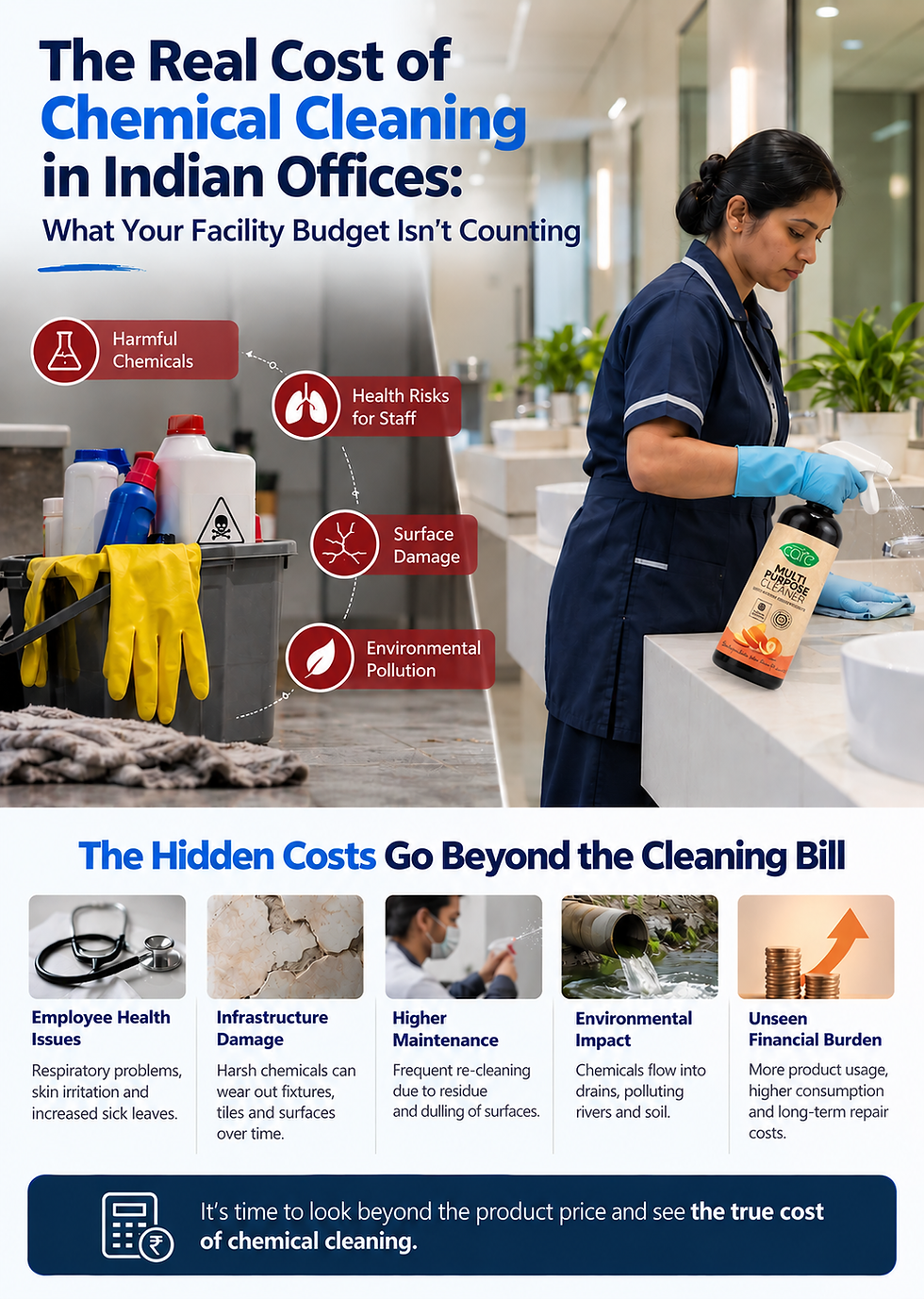
Maintenance costs are also reduced in buildings because their systems are designed for long-term efficiency. Traditional sanitation systems often require frequent repairs, high chemical usage, and regular odor control measures. Sustainable buildings address these issues through better plumbing systems, efficient wastewater management, and eco-friendly cleaning practices. This results in fewer breakdowns, reduced maintenance interventions, and lower operational costs over time.
Technology further enhances the efficiency of green buildings. Smart monitoring systems and automated sensors help facility managers track water usage, detect leaks, and monitor sanitation systems in real time. This allows problems to be addressed early, preventing expensive repairs and ensuring the building operates smoothly.
Companies like Ekam Eco Solutions are playing an important role in supporting this transition toward sustainable infrastructure. By offering solutions such as waterless urinals, odor-control technologies, eco-friendly sanitation products, and compact wastewater treatment systems, they help organizations reduce water usage while maintaining high hygiene standards. These innovations enable institutions, corporate offices, and commercial buildings to adopt sustainable sanitation practices without compromising on efficiency or cleanliness.

Beyond cost savings, green buildings also create healthier indoor environments. Reduced chemical exposure, better sanitation systems, and efficient water management contribute to improved hygiene and comfort for people using the space. As a result, employees and visitors benefit from cleaner, safer environments that promote overall well-being.
Commercial buildings often lose a significant amount of money through inefficient water use, leaks, and outdated sanitation systems. High water consumption not only increases utility bills but also leads to frequent maintenance issues such as pipe blockages, odor problems, and system breakdowns. By adopting smarter water management practices like wastewater treatment, reuse systems, and water-efficient fixtures , buildings can reduce both water usage and maintenance costs by up to 50%. This shift transforms water from a recurring expense into a managed resource that delivers long-term savings and sustainability benefits.
Ekam Eco Solutions helps commercial spaces achieve this by offering advanced wastewater treatment solutions, bio-enzymes, and eco-friendly cleaning products that reduce chemical usage, prevent clogging, and improve system efficiency. Their solutions ensure that wastewater is treated and reused effectively, lowering fresh water demand and operational costs. Meanwhile, Zerodor enhances sanitation with waterless urinals and odor-control technology, eliminating the need for flushing while drastically reducing water consumption and maintenance requirements. Together, Ekam Eco and Zerodor provide a comprehensive, sustainable approach that helps commercial buildings cut costs, improve hygiene, and operate more efficiently.

Conclusion
India is steadily moving toward a more sustainable future in infrastructure development. As organizations focus more on environmental responsibility and long-term cost efficiency, green buildings are becoming a key part of that transformation. By combining smart design, responsible water management, and innovative sanitation solutions from companies like Ekam Eco Solutions, buildings can significantly reduce operational costs while contributing to a cleaner and more sustainable planet.


Comments