

World Oceans Day 2026 – Protecting Oceans Starts Closer Than You Think
Reimagine Our Relationship with Water
This year's World Oceans Day theme, "Reimagine: Beyond the World We Know, A New Relationship with Our Ocean," is more than a call for awareness - it's a call for a shift in perspective. For too long, we've viewed the ocean as something distant: a place we visit on holidays, admire in documentaries, or depend on for food and trade. But the reality is that the ocean is deeply connected to our everyday lives. It regulates our climate, produces much of the oxygen we breathe, and supports countless ecosystems that sustain life on Earth. Reimagining our relationship with the ocean means recognizing that our daily actions, even those far from the coastline, have a direct impact on its health.
This new relationship requires us to move from being passive beneficiaries to active stewards. It means understanding that ocean conservation doesn't begin where the land ends , it begins where our water journey starts. Every litre of water we consume eventually returns to the environment, carrying with it the consequences of how we manage it. By treating wastewater responsibly, reducing pollution at the source, and embracing water reuse, we become part of a larger solution. Reimagining the ocean is ultimately about reimagining our responsibility toward every drop of water that connects us to it.

The Ocean Is Closer Than You Think
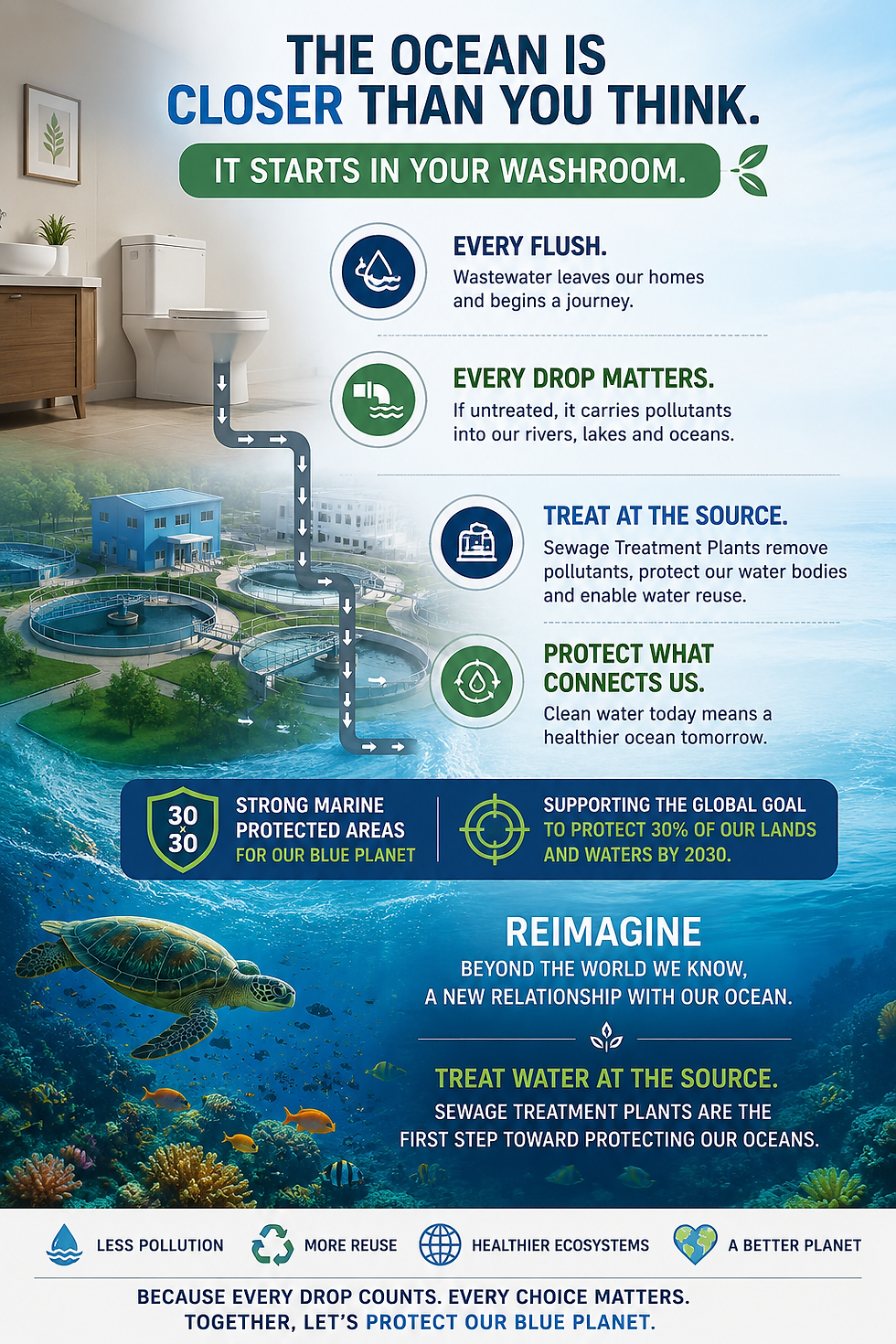
When people hear the word ocean, they often picture vast blue waters, distant coastlines, and marine life far removed from their daily routines. But the ocean is much closer than it seems. Every drop of water that flows through our homes, offices, hotels, and communities is part of a larger water cycle that eventually connects to rivers, lakes, groundwater, and ultimately the sea. The ocean is not a separate world existing beyond our cities , it is the final destination of the water systems we interact with every day. What we discharge into the environment today can influence marine ecosystems tomorrow.
This is why ocean conservation cannot be limited to coastal regions alone. The health of our oceans depends on the health of our rivers, and the health of our rivers depends on how responsibly we manage wastewater at its source. Pollutants, untreated sewage, and excess nutrients don't recognize geographical boundaries they travel through interconnected water networks, impacting ecosystems along the way. Protecting the ocean therefore begins long before the shoreline , it starts with the decisions we make about water treatment, reuse, and conservation in our buildings and communities.
Strong Marine Protected Areas for Our Blue Planet
The 2026 World Oceans Day action theme, "Strong Marine Protected Areas for Our Blue Planet," highlights a global commitment to protect at least 30% of the world's lands and waters by 2030. Marine Protected Areas (MPAs) serve as safe havens for marine life, allowing fish populations to recover, coral reefs to regenerate, and fragile ecosystems to thrive without constant human pressure. These protected zones are critical for preserving biodiversity, strengthening food security, and improving the resilience of oceans against climate change.
However, protected areas alone cannot safeguard our oceans if pollution continues to flow into them. Conservation must extend beyond coastlines and address the sources of environmental damage upstream. Untreated wastewater, nutrient pollution, and contaminants can travel through rivers and waterways, eventually reaching even the most protected marine ecosystems. Building a truly "blue planet" therefore requires a dual approach: protecting marine habitats while preventing pollution at its source. Strong Marine Protected Areas need strong water management systems on land—and that begins with responsible wastewater treatment and reuse.
Why Sewage Treatment Plants Matter More Than Ever
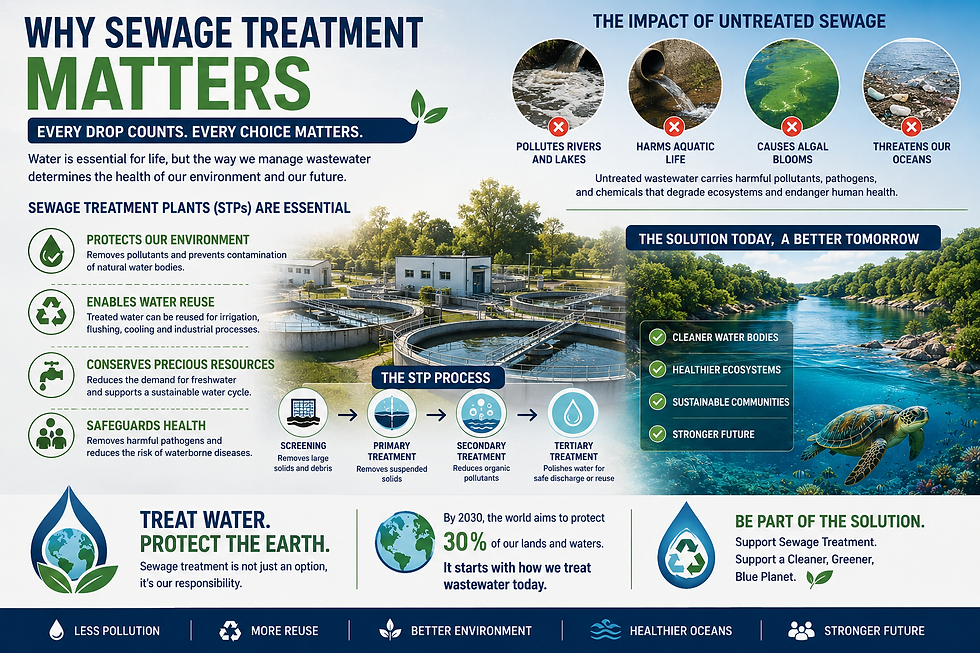
Every day, millions of litres of wastewater are generated from homes, offices, hotels, industries, and commercial buildings. Without proper treatment, this wastewater can carry pollutants, pathogens, excess nutrients, and harmful contaminants into natural water bodies. Over time, these pollutants degrade water quality, harm aquatic ecosystems, contribute to algal blooms, and threaten biodiversity. What leaves a building as wastewater can eventually impact rivers, lakes, groundwater reserves, and even the oceans if not managed responsibly.
This is where Sewage Treatment Plants (STPs) become essential. More than just a compliance requirement, an STP acts as a critical environmental safeguard by treating wastewater before it is released or reused. It removes harmful contaminants, enables water recycling, reduces pressure on freshwater resources, and supports a more sustainable water cycle. In a world facing growing water scarcity and increasing environmental challenges, effective sewage treatment is no longer optional , it's one of the most practical and impactful ways to protect our water resources and the ecosystems that depend on them.
A New Relationship with Our Ocean
For generations, we have viewed the ocean primarily as a resource , a source of food, trade, transportation, and economic growth. But the World Oceans Day 2026 theme challenges us to build a different kind of relationship. A relationship based not on what we can take from the ocean, but on how we can protect it. It asks us to recognize that the ocean is not separate from our lives; it is the system that helps regulate our climate, supports biodiversity, and sustains life on Earth. The future of our oceans depends on whether we continue treating them as an endless resource or begin treating them as a shared responsibility.
Building this new relationship starts with understanding our connection to water. Every action we take , from the water we consume to the wastewater we generate , has an impact beyond our immediate surroundings. Being responsible guardians of the ocean means reducing pollution before it reaches natural water bodies, conserving freshwater resources, and embracing sustainable water management practices. When we treat wastewater at the source and prioritize water reuse, we are not just managing water better; we are actively contributing to healthier rivers, healthier ecosystems, and ultimately, healthier oceans. A new relationship with the ocean begins with recognizing that every drop of water connects us to its future.
The First Step Towards Cleaner Oceans
Protecting our oceans can often feel like a challenge that is too large for any one person, building, or organization to influence. But meaningful change rarely begins with grand gestures , it begins with everyday decisions. The way we manage water today determines the health of our water bodies tomorrow. Every litre of wastewater that is treated before being discharged or reused is a step toward reducing pollution, conserving resources, and protecting the ecosystems that sustain life both on land and at sea.
This World Oceans Day, let's remember that ocean conservation doesn't start where the shoreline begins. It starts where wastewater is generated. It starts in our homes, offices, hotels, industries, and communities. By investing in responsible wastewater treatment and embracing water reuse, we can transform a potential source of pollution into a powerful force for environmental protection. Because a cleaner ocean isn't built by a single action , it's built by millions of responsible choices, one drop at a time.


The shift from seeing the ocean as a distant vacation spot to a daily life support system really hits home—I never thought about how much of our oxygen actually comes from it. I've been using a daily habit tracker to cut down on single-use plastics, and it's made me realize how those small choices ripple outward, so check out https://hyros.pro
The point about seeing the ocean as distant really hits home—I never think about it when I'm commuting or grocery shopping, yet it's regulating the very air I breathe. It's a humbling shift to realize conservation starts with that daily mindset, and I've been tracking my own impact with a tool that https://lyrics-to-song-ai.com
The shift from seeing the ocean as a distant holiday backdrop to recognizing it in every breath we take is exactly the perspective we need. I've been using a daily habit tracker to log my plastic-free choices, and it’s wild how those small actions ripple outward—check out the full guide on https://video-upscaler.org
The shift from seeing the ocean as a distant vacation spot to recognizing it as our daily life support system really hits home—I never thought about how much of our oxygen comes from it until now. I've been using a simple daily habit tracker to log my plastic-free choices, and it's amazing how those small actions add up. Check out https://hi3d.pro
The point about seeing the ocean as distant really hits home—I never think about it when I'm commuting, yet it's driving the weather I walk through. It's a much-needed shift to bring that connection into our daily routines, and I've been using a simple habit tracker to remind myself to make one ocean-friendly choice each day, check it out https://3dtrellis.com