

Green Tech for a Better Tomorrow: The Role of IIT Innovations in Sustainable India
- bhumikat1
- Feb 14
- 3 min read
India’s sustainability journey is not being shaped only in policy rooms or corporate strategies. It is being built in laboratories, pilot projects, and real-world test environments where innovation meets necessity. At the heart of this movement are the Indian Institutes of Technology (IITs), institutions known for turning complex challenges into scalable solutions. What defines IIT-led innovation is its focus on impact over ideology. Whether the problem is water scarcity, energy efficiency, or urban waste, solutions are designed to work within India’s constraints high density, limited resources, and growing demand.
From Campus Research to Scalable Solutions
Sustainability research at IITs rarely stays theoretical. Campuses often function as testing grounds where new technologies are deployed, monitored, and improved before wider adoption. This approach ensures innovations are not only technically sound but also operationally viable.
These campus-scale experiments create a bridge between research and industry - allowing ideas to mature into solutions that cities, institutions, and businesses can confidently adopt.
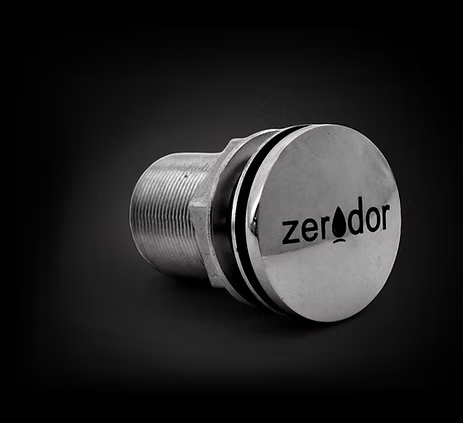
Water Innovation: Where Zerodor Fits the Equation
Water conservation has been a central theme in IIT sustainability research, especially around reducing unnecessary consumption. One emerging area of focus is sanitation design, where traditional systems consume vast amounts of potable water without delivering proportional value.
This is where Zerodor waterless urinal innovation aligns strongly with IIT-style thinking.
By completely eliminating flush water - rather than optimizing it - Zerodor challenges the assumption that sanitation must depend on continuous water use. Its advanced odor-control and sealing technology allows restrooms to remain hygienic while saving thousands of litres of water annually in high-footfall environments like campuses, offices, and public institutions.
For sustainability-driven institutions, this represents applied innovation: simple in concept, powerful in impact.
Circular Thinking: Using Less by Designing Smarter
Many IIT-led projects emphasize circular resource use - designing systems where waste is minimized or removed entirely. Zerodor reflects this philosophy by removing water from sanitation where it isn’t required, reducing both freshwater demand and downstream sewage treatment load.
Less water in means:
Lower energy use at STPs
Reduced infrastructure stress
Lower operational costs
This systems-level thinking mirrors the way IITs approach sustainability - not as isolated fixes, but as interconnected solutions.

Clean Energy, Smart Infrastructure, and Integrated Design
Beyond water, IIT innovations continue to reshape clean energy adoption, smart grids, and sustainable construction. From energy-efficient buildings to low-carbon materials, these technologies share a common thread: efficiency built into design, not added later.
When solutions like Zerodor are integrated into such infrastructure planning, sustainability outcomes multiply. Buildings become not just energy-smart, but water-smart as well.
From Innovation to Adoption
One reason IIT innovations succeed is their focus on real-world adoption. Technologies are evaluated on durability, maintenance, and user experience - not just performance metrics.
Zerodor’s success in institutional settings reflects this same mindset. No behavior change is required. No complex operations are introduced. The innovation works quietly in the background saving water every day.
Educating by Example
Institutions that adopt visible green technologies send a powerful message. When students and professionals encounter waterless sanitation systems like Zerodor on campus, sustainability becomes tangible not theoretical.
It shows that innovation doesn’t always look futuristic. Sometimes, it simply looks smarter.
Engineering India’s Sustainable Future
India’s path to sustainability will be shaped by technologies that reduce consumption at the source, scale effortlessly, and work within real constraints. IIT innovations continue to lead this effort by pairing deep engineering with practical application.
Solutions like Zerodor represent the next phase of green tech where efficiency is designed in, waste is eliminated, and sustainability becomes part of everyday infrastructure.
Because a better tomorrow isn’t just imagined. It’s engineered and implemented.


Comments